
Artificial intelligence is becoming part of everyday life, and young people are among the fastest to adapt to it. While many adults believe that AI is mainly used by students to finish homework faster, the reality is much broader. Today, kids using AI rely on these tools for learning, creativity, conversation, decision-making, and even emotional support. Instead of seeing artificial intelligence as something new or unusual, children often treat it as a normal part of their daily routine.
Understanding how kids using AI actually behave is important for parents, teachers, and anyone interested in the future of technology. The way children interact with AI today will shape how society uses these tools in the years ahead.
AI Is Becoming a Daily Companion for Children
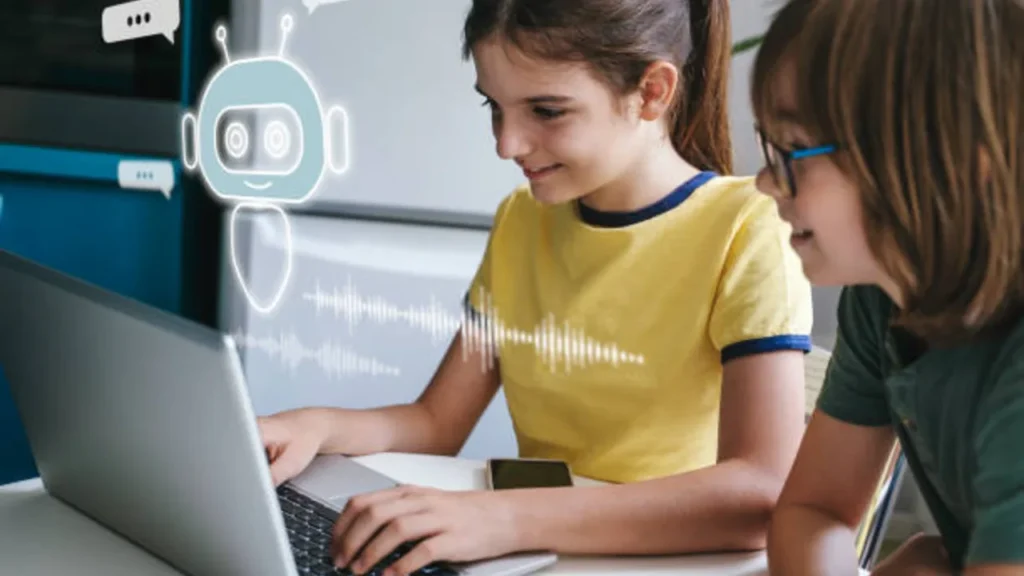
One of the biggest changes in recent years is how naturally children talk to AI systems. Unlike traditional search engines, AI tools respond in a conversational way, which makes them feel more personal. Because of this, kids using AI often treat chatbots like someone they can ask questions to anytime.
Children may ask about school topics, personal problems, hobbies, or simple everyday questions. Since AI does not judge or criticize, some kids feel more comfortable asking it things they might not ask parents or teachers. This constant availability makes AI feel like a companion rather than just a tool.
For many young users, talking to AI becomes part of their thinking process. Instead of wondering alone, they open a chat and ask. Over time, this habit changes how they solve problems and how they make decisions.
Homework Help Is Only One Part of the Story
Many adults worry that kids using AI are simply using it to cheat at school. While this can happen, it is only one small part of how AI is actually used. A large number of students use AI to understand lessons, check grammar, summarize information, or organize their thoughts.
In these situations, AI works more like a tutor than a shortcut. Students can ask for explanations in different ways until they understand. This can make learning feel less stressful, especially for children who are afraid to ask questions in class.
Some students also use AI to generate ideas for essays, projects, or presentations. Instead of copying answers, they use it to get started or to see different ways to explain something. This shows that kids using AI are not always avoiding work. In many cases, they are trying to learn more efficiently.
Kids Using AI for Everyday Decisions
Another surprising use of artificial intelligence is for small daily choices. Children and teenagers often ask AI what to wear, what to say in messages, or how to handle situations with friends. These questions may seem simple, but they show how comfortable young people have become with relying on technology.
Teenagers especially use AI to test ideas before speaking to real people. They may ask how to respond to a text, how to apologize, or how to explain their feelings. In these moments, AI becomes a place to practice communication.
This means kids using AI are not only using it for schoolwork. They are also using it to manage social situations, which is something earlier generations could not do.
Emotional Support and AI Conversations
Some children also use AI when they feel lonely, worried, or unsure about something. Because AI replies in a friendly and calm way, it can make conversations feel safe. Kids know the system is not human, but the interaction can still feel personal.
For young people who spend a lot of time online, talking to AI may feel as normal as talking to friends. They might share thoughts, ask for advice, or simply chat when they are bored. In these cases, kids using AI are looking for comfort, not just information.
Experts say this can have both positive and negative effects. On one hand, it gives children a place to ask questions without fear. On the other hand, relying too much on AI for emotional support could reduce real-life social interaction.
Creativity and Entertainment With AI
Not all uses of AI are serious. Many kids use AI for fun and creative activities. They generate stories, write songs, create characters, or design imaginary worlds. Because AI can respond quickly, it makes creative experiments easier.
Children often see AI as something they can play with rather than something they must study. This leads to new forms of entertainment where the user and the AI create ideas together. For creative kids, this can feel exciting and inspiring.
Kids using AI in this way are developing new skills, especially in writing, storytelling, and problem-solving. These skills may become more important in the future as technology continues to grow.
Why Adults Often Underestimate AI Use
Many parents do not realize how often their children use AI. Young people usually learn new technology faster, and they explore features that adults may not notice. Because AI tools are available on phones and computers, they can be used quietly at any time.
Another reason adults miss it is that AI use does not always look different from normal screen time. A child may seem to be chatting, studying, or writing, but AI may be helping in the background.
This gap between what adults think and what kids actually do makes it harder to understand the real impact of kids using AI.
The Benefits of Kids Using AI
When used in a healthy way, artificial intelligence can be helpful for children. AI can explain difficult topics, support creativity, and give students confidence when they are unsure about something. It can also make learning more interactive and less stressful.
For students who struggle in school, AI can provide extra help without embarrassment. They can ask the same question many times until they understand. For creative students, AI can offer ideas that inspire new projects.
Because of this, kids using AI may develop skills that are useful for the future, especially in problem-solving and communication.
The Risks of Relying Too Much on AI
Even though AI has benefits, there are also concerns. If children depend on AI for every answer, they may stop thinking independently. Instead of solving problems on their own, they may ask a chatbot first.
There are also worries about social development. AI always responds politely, but real people do not. If kids talk to AI more than to others, they may have fewer chances to learn how to deal with disagreement or conflict.
Another risk is that children may trust AI too much. AI can make mistakes, but young users may believe the answers are always correct.
The Future of Kids Using AI
The way kids using AI today interact with technology will influence the future. For younger generations, artificial intelligence is not something new. It is simply part of the world they grow up in.
Because of this, the goal should not be to stop children from using AI, but to teach them how to use it wisely. They need to learn when to trust technology, when to question it, and when to think for themselves.
As artificial intelligence continues to develop, children will keep finding new ways to use it. Whether for learning, creativity, or conversation, one thing is clear: kids using AI are shaping the next generation of digital life.