
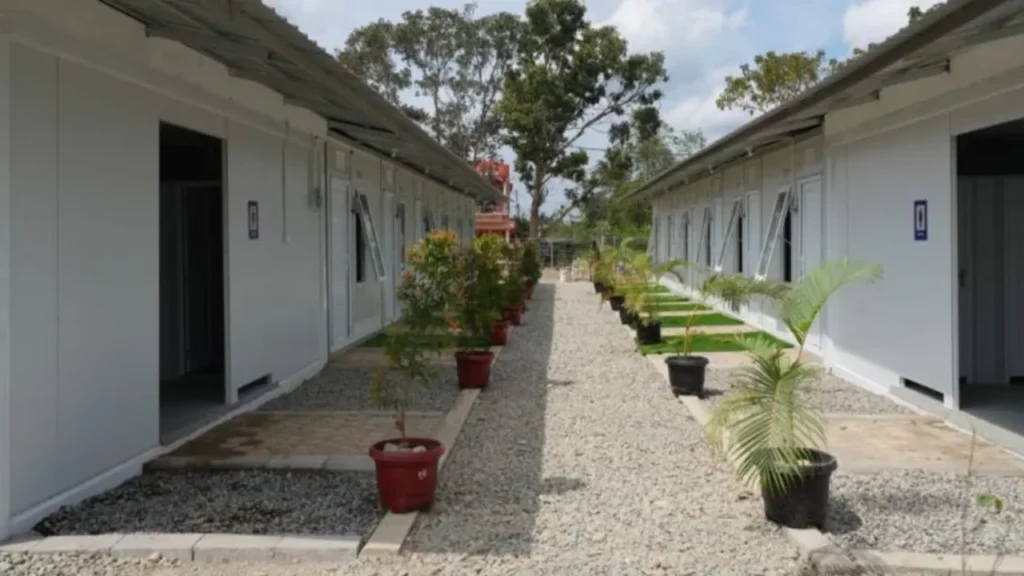

Post-disaster housing construction in Sumatra has entered an accelerated phase as authorities prioritize rapid recovery for communities impacted by floods and landslides. The program focuses on delivering temporary housing for immediate relief while simultaneously advancing permanent housing construction to ensure long-term stability for displaced residents.
As Sumatra continues to experience recurring natural disasters, housing reconstruction has become a central pillar of post-disaster recovery, bridging the gap between emergency response and sustainable rebuilding.
Why Post-Disaster Housing Construction Matters in Sumatra
Natural disasters in Sumatra frequently result in:
-
Severe damage to residential buildings
-
Large-scale displacement of families
-
Loss of access to basic living infrastructure
Without fast and coordinated housing construction, disaster-affected communities face prolonged instability, economic disruption, and health risks. Accelerating post-disaster housing construction in Sumatra is therefore critical to restoring safety, dignity, and community resilience.
Temporary Housing Construction: Immediate Shelter Solutions
Temporary housing construction plays a vital role in the early recovery phase. These housing units are designed to:
-
Provide safe and livable shelter shortly after disasters
-
Reduce reliance on emergency tents or evacuation centers
-
Allow families to resume daily routines while permanent homes are prepared
In several disaster-affected areas, temporary housing units have already been completed and are ready for occupancy. These structures are typically built using standardized designs to ensure rapid deployment, basic comfort, and functional durability.
Permanent Housing Development: Long-Term Recovery
While temporary housing addresses urgent needs, permanent housing construction represents the core of post-disaster rebuilding in Sumatra. Permanent homes are planned with:
-
Improved structural safety
-
Proper sanitation and clean water access
-
Electricity and basic public infrastructure
-
Locations outside high-risk disaster zones whenever possible
Permanent housing projects are developed to support long-term settlement rather than short-term shelter, allowing communities to rebuild social and economic life with greater security.
Accelerated Construction Strategy
The acceleration of post-disaster housing construction in Sumatra is driven by several key strategies:
1. Parallel Construction Phases
Temporary and permanent housing are built simultaneously, not sequentially. This reduces waiting time and shortens the overall recovery cycle.
2. Standardized Building Systems
Using standardized housing designs helps speed up construction while maintaining consistent quality and safety standards.
3. Coordinated Field Implementation
Land preparation, beneficiary verification, and infrastructure installation are carried out in parallel to avoid construction bottlenecks.
Geographic Focus of Housing Reconstruction
Post-disaster housing construction is concentrated in multiple disaster-prone provinces across Sumatra, including:
-
Coastal and river-adjacent regions affected by flooding
-
Highland areas impacted by landslides
-
Communities where housing damage reached critical levels
Each location applies site-specific planning to ensure housing is built in safer zones while remaining accessible to residents’ original livelihoods.
Key Objectives of Post-Disaster Housing Construction
The accelerated housing program aims to achieve several outcomes:
| Objective | Impact |
|---|---|
| Rapid shelter provision | Reduces displacement duration |
| Safe permanent housing | Minimizes future disaster risk |
| Community stabilization | Supports social and economic recovery |
| Sustainable rebuilding | Lowers long-term maintenance costs |
Challenges in Post-Disaster Housing Projects
Despite acceleration, housing construction in post-disaster environments faces challenges such as:
-
Limited land availability in safe zones
-
Logistics constraints in remote areas
-
Alignment between emergency response and long-term planning
Addressing these challenges requires adaptive construction strategies and continuous coordination between central and local stakeholders.
Post-Disaster Housing as a Recovery Backbone
Housing reconstruction is not only about rebuilding physical structures. In Sumatra, post-disaster housing construction functions as:
-
A foundation for restoring local economies
-
A catalyst for reopening schools, markets, and public services
-
A key factor in preventing long-term displacement
By securing stable housing, disaster-affected families can focus on rebuilding livelihoods rather than surviving temporary conditions.
Future Outlook
As post-disaster housing construction in Sumatra continues, the focus remains on:
-
Completing permanent housing units efficiently
-
Ensuring housing quality and safety compliance
-
Supporting resilient community development
Accelerated housing delivery is expected to remain a priority as Sumatra strengthens its disaster recovery and mitigation framework.
FAQ: Post-Disaster Housing Construction in Sumatra
What is post-disaster housing construction?
Post-disaster housing construction refers to the building of temporary and permanent homes for communities whose residences were damaged or destroyed by natural disasters.
Why is temporary housing necessary?
Temporary housing provides immediate shelter while permanent homes are still under construction, preventing prolonged displacement.
How long does permanent housing construction take?
Timelines vary by location and site conditions, but accelerated programs aim to significantly reduce standard rebuilding durations.
Is permanent housing safer than previous homes?
Yes. Permanent housing is typically designed with improved safety standards and better site selection to reduce disaster risk.