
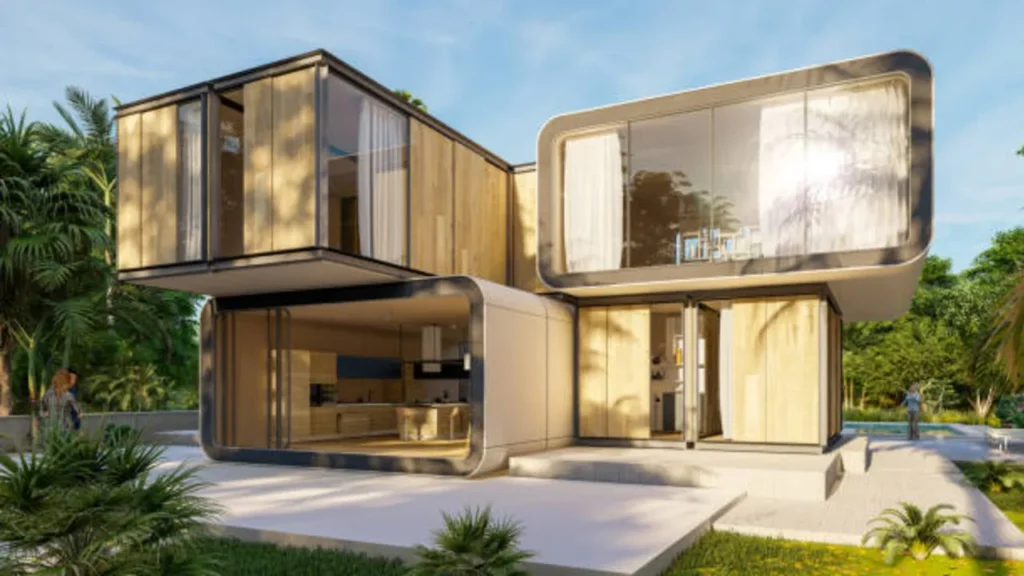

The idea of metabolism architecture represents one of the most ambitious visions in modern architectural history. Developed in the mid-20th century, this movement proposed that cities should grow, change, and adapt like living organisms. Instead of building static structures meant to last forever, architects imagined modular buildings, replaceable components, and flexible urban systems that could evolve over time. Today, many of these ideas are being revisited as cities search for new solutions to sustainability, density, and long-term urban growth.
From capsule towers to circular cities, metabolism architecture introduced concepts that continue to influence contemporary design. What once seemed futuristic is now becoming increasingly relevant as architects rethink how buildings and cities should function in a rapidly changing world.
The Origin of Metabolism Architecture
The metabolism architecture movement emerged in Japan during the 1960s, a period of rapid economic growth and urban expansion. Architects and designers began questioning traditional planning methods that treated buildings as permanent objects. Instead, they proposed that cities should behave like biological systems, capable of growth, renewal, and transformation.
The term “metabolism” was chosen to describe this idea of constant change. Just as living organisms replace cells over time, metabolist architects believed buildings should allow parts to be removed, replaced, or expanded without destroying the entire structure. This approach aimed to solve the problem of fast urbanization while maintaining flexibility for the future.
Metabolism architecture focused on modular construction, large structural frameworks, and interchangeable units. These principles allowed buildings to adapt to new needs without complete reconstruction.
Capsule Towers as a Symbol of Modular Design
One of the most famous examples of metabolism architecture is the capsule tower concept. These buildings were designed with a central structural core that supports small prefabricated units attached to the outside. Each capsule could function independently, allowing individual modules to be replaced or upgraded.
This idea challenged the traditional belief that buildings must be permanent. Instead, the structure was treated as a long-term framework, while the living spaces were temporary and replaceable. Capsule towers demonstrated how architecture could respond to technological change without rebuilding from scratch.
The modular approach also allowed efficient use of space in dense urban areas. By stacking small units vertically, architects could create compact housing solutions suitable for growing cities.
The Vision of Circular Cities
Metabolism architecture was not limited to individual buildings. Architects also imagined entire cities designed to grow in cycles. The idea of the circular city proposed urban systems that could expand outward while maintaining a strong structural core.
In these concepts, infrastructure such as transportation, utilities, and public spaces formed the permanent framework, while residential and commercial units could be replaced over time. This allowed cities to evolve without losing their overall organization.
Circular city design also introduced the idea of long-term sustainability. Instead of demolishing old buildings and creating waste, modular components could be removed and reused. This approach is similar to modern ideas about recycling, adaptive reuse, and sustainable construction.
Large Structural Frameworks and Urban Flexibility
A key feature of metabolism architecture is the use of large structural systems that support smaller units. These frameworks act as the backbone of the building or city, while the individual modules provide flexibility.
This concept allows architects to separate permanent elements from temporary ones. Structural frames, bridges, and service cores are designed to last for decades, while living spaces can change according to new requirements.
In modern cities, this idea can be seen in mixed-use developments, modular housing, and adaptable office buildings. Although the original metabolist projects were often experimental, their principles are now widely used.
The Influence on Modern Modular Architecture
Many ideas from metabolism architecture have influenced contemporary modular construction. Prefabricated units, plug-in systems, and flexible layouts are now common in residential, commercial, and industrial buildings.
Modern modular architecture focuses on efficiency, speed, and sustainability. Buildings can be assembled quickly using factory-made components, reducing construction time and waste. This approach reflects the original metabolist vision of adaptable and replaceable structures.
In large cities where land is limited, modular design also allows vertical expansion without major structural changes. This makes metabolism architecture increasingly relevant for modern urban planning.
Urban Metabolism and Sustainable Cities
The concept of metabolism architecture has also influenced environmental thinking. Today, the term “urban metabolism” is often used to describe how cities consume resources and produce waste.
Architects and planners are studying how buildings can function like ecosystems, using energy efficiently and reducing environmental impact. Circular city concepts, renewable materials, and flexible structures all come from the same philosophy introduced by the metabolist movement.
By designing cities that can adapt instead of being rebuilt, architects can reduce demolition waste and extend the life of urban infrastructure. This approach is becoming more important as cities grow larger and resources become limited.
Why Metabolism Architecture Still Matters Today
Although many original metabolist projects were never fully realized, the ideas behind metabolism architecture continue to influence modern design. Rapid urbanization, climate change, and technological development require buildings that can change over time.
Traditional construction methods often create rigid structures that are difficult to modify. Metabolism architecture offers an alternative by allowing buildings to evolve instead of being replaced.
In the future, cities may rely more on modular systems, flexible frameworks, and replaceable components. These ideas, once considered futuristic, are becoming practical solutions for modern urban challenges.
The Future of Adaptive Urban Design
As architects search for new ways to design sustainable cities, the principles of metabolism architecture are gaining attention again. Capsule towers, circular cities, and modular frameworks show how buildings can respond to change instead of resisting it.
Future urban environments will likely combine permanent infrastructure with adaptable structures. This approach allows cities to grow, shrink, and transform without losing stability.
The vision of metabolism architecture reminds us that buildings are not only objects but part of a living system. By designing with flexibility in mind, architects can create cities that survive for generations while continuing to evolve.
Conclusion
Metabolism architecture introduced a revolutionary way of thinking about buildings and cities. Through modular design, capsule towers, and circular urban concepts, the movement showed how architecture could adapt like a living organism.
Today, these ideas are more relevant than ever. As the world faces rapid urban growth and environmental challenges, flexible and sustainable design is becoming essential. The legacy of metabolism architecture continues to shape how architects imagine the future of cities.