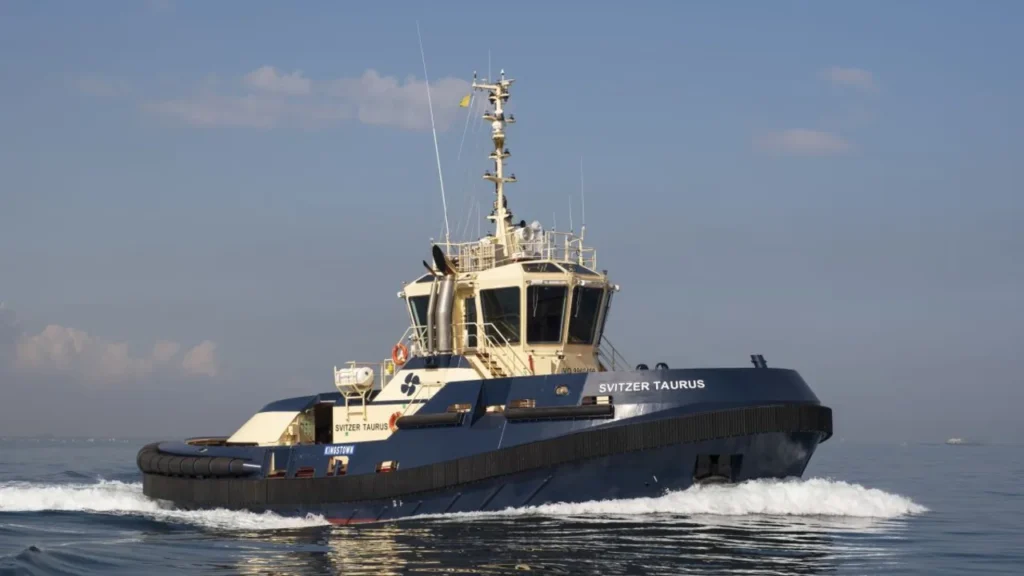

For decades, tugboats were an unglamorous but essential part of port infrastructure—rarely in headlines, yet critical to the safe movement of ships. Today, that quiet corner of maritime engineering is experiencing a shift, and India is at the center of it. Once viewed primarily as a buyer of tug designs or a secondary builder, the country has rapidly expanded its domestic tug construction capability. Industry coverage from outlets such as Riviera Maritime Media underscores how India’s shipyards are now delivering a steady pipeline of modern harbor, ASD, and green tugs.
This rise is not accidental. It reflects a convergence of port expansion, policy support, and technical maturation across Indian yards. As global ports grow larger, emissions rules tighten, and operators demand reliable maneuvering power, tug fleets are being renewed at scale. India’s ability to build cost-effective, specification-compliant tugs—at speed—has turned it into a strategic supplier. The result: India is no longer a peripheral participant; it is emerging as a tug construction powerhouse with growing global relevance.
Why Tugboats Are Strategic Assets in Modern Ports

Tugboats are the unseen workhorses of maritime trade. Every container ship berthing, LNG carrier turning, or bulk vessel unberthing depends on precise tug assistance. As vessels have grown in size and ports have become more congested, the technical demands placed on tugs have increased sharply. Higher bollard pull, improved maneuverability, and reliable redundancy are now baseline expectations.
Beyond size, regulation is reshaping tug requirements. Ports are under pressure to reduce emissions, noise, and operational risk. Tugs—operating continuously within port limits—are prime targets for efficiency upgrades. This has driven demand for modern designs, hybrid systems, and electric propulsion. In this context, tugboats are no longer generic assets; they are strategic tools that enable port productivity, safety, and environmental compliance. Countries that can supply them at scale gain influence across the maritime value chain.
The Growth of India’s Domestic Tug Construction Capacity
India’s tugbuilding growth is rooted in a broader expansion of domestic shipbuilding competence. Indian yards that once focused on basic vessels have moved decisively into specialized harbor craft. Today, they deliver a wide range of tugs—typically from 20 to 80+ tonnes of bollard pull—tailored for container terminals, bulk ports, and offshore support.
Several factors underpin this capability. First is fabrication scale. Indian shipyards operate large workshops with in-house steel cutting, welding, and block assembly, enabling faster build cycles. Second is design maturity. Many yards now work with proven tug platforms while adapting layouts, propulsion, and deck equipment to client needs. Third is classification familiarity: compliance with major class societies has become routine rather than exceptional.
Crucially, domestic demand has provided momentum. Port authorities and terminal operators across India have commissioned new tug fleets, giving yards the order volume needed to refine processes. The result is a virtuous cycle—experience drives quality, quality drives confidence, and confidence drives further orders.
Government Policy and the “Make in India” Effect
Policy has played a catalytic role in India’s tug construction rise. Under the broader “Make in India” framework, maritime self-reliance is treated as a strategic objective. Tugboats—used by ports, public authorities, and the navy—are a natural fit for domestic procurement. Favorable tender conditions and local-content preferences have encouraged operators to source from Indian yards.
This policy alignment does more than secure orders. It reduces dependence on imported vessels, shortens delivery timelines, and keeps lifecycle support within national borders. Importantly, it also allows government and industry to collaborate on standardization—streamlining specifications across ports and enabling series construction.
Over time, these measures have strengthened India’s industrial base. Tugbuilding has become a proving ground for higher-value ship construction, helping yards climb the complexity ladder. What began as a localization effort is now positioning India as a competitive exporter in its own right.
Green and Electric Tugs: A Turning Point for Indian Shipyards
Perhaps the most telling sign of India’s maturation is its move into green and electric tug construction. As ports pursue decarbonization, tugs are among the first assets targeted for electrification due to predictable duty cycles and centralized charging opportunities.
Indian shipyards have responded with hybrid and fully electric tug projects, integrating battery systems, energy management software, and optimized propulsion. These builds demand tighter tolerances, advanced systems integration, and closer coordination with equipment suppliers—capabilities that signal a step change in technical depth.
For India, green tugs are more than an environmental milestone. They represent entry into a premium segment of the market, where compliance, reliability, and lifecycle performance matter as much as price. Successfully delivering electric tugs enhances India’s credibility not just domestically, but internationally, as ports worldwide seek proven low-emission solutions.
Competitiveness Against Traditional Tug-Building Nations
Historically, tug construction has been dominated by established builders in Europe and East Asia. These regions benefit from long reputations, strong brands, and deep engineering heritage. India’s rise introduces a new competitive dynamic.
India’s primary advantage lies in cost-performance balance. Competitive labor costs, integrated fabrication, and efficient project management allow Indian yards to offer attractive pricing without sacrificing core specifications. Build timelines are often shorter, and customization is handled with relative agility.
Challenges remain. International buyers still scrutinize after-sales support, spare parts availability, and long-term reliability. Brand perception takes time to build. Yet as more Indian-built tugs operate successfully, these barriers are steadily lowering. The market is responding not to promises, but to delivered performance.
Export Potential and Regional Influence
With domestic demand stabilizing production, Indian yards are increasingly export-ready. Regions such as Southeast Asia, the Middle East, and Africa are expanding port infrastructure and renewing aging tug fleets. These markets value robust designs, predictable delivery, and competitive pricing—areas where India aligns well.
Export potential is amplified by flexibility. Indian builders can adapt standard tug platforms to local regulations, climatic conditions, and operational preferences. This balance between standardization and customization is particularly attractive for emerging ports that lack the scale for bespoke designs but need reliable assets.
As export references accumulate, India’s influence will extend beyond hulls and machinery. It will shape pricing benchmarks, delivery expectations, and the pace of fleet renewal across developing maritime regions.
What This Means for the Global Maritime Industry
India’s emergence as a tug construction hub has wider implications. Increased supply introduces pricing pressure, benefiting port operators and accelerating replacement of inefficient vessels. Competition encourages innovation, particularly in green propulsion and lifecycle optimization.
For established builders, India’s rise is a signal to differentiate—through advanced automation, digital integration, or niche specialization. For ports, it expands choice and reduces dependency on a narrow supplier base. The tug market, once relatively static, is becoming more dynamic and globally distributed.
Conclusion: From Domestic Builder to Global Tug Powerhouse
India’s transformation in tug construction is neither sudden nor superficial. It reflects years of industrial investment, policy alignment, and learning-by-doing. From conventional harbor tugs to electric propulsion pioneers, Indian shipyards are proving their capacity across the value spectrum.
Tugboats may be small relative to oceangoing giants, but their strategic importance is immense. By mastering their construction, India has unlocked a pathway to broader shipbuilding leadership. Over the next five years, as green fleets expand and global ports modernize, India’s role is set to grow further. The message is clear: India is no longer catching up—it is shaping the future of tug construction.