


The global business landscape has reached a psychological turning point. As we navigate 2026, the integration of artificial intelligence has moved beyond simple automation and into the core of how we choose our paths forward. The most startling development, however, isn’t the technology itself, but the “Logic Leap”—a shift where humans are now adapting their own behavior to match the perceived rationality of AI decision-making.
The Behavioral Science of Trust
New research from the UCD Michael Smurfit Graduate Business School has provided a window into this evolving human-machine relationship. Behavioral scientists utilized an economic game involving real money to observe how individuals interact with different types of partners.
-
The “Fairness” Shift: The study found that participants were significantly more likely to accept financially unfair offers when they originated from an AI rather than a human.
-
Emotion vs. Logic: This discrepancy exists because humans generally view other people as being driven by emotion and reciprocity, whereas AI decision-making is perceived as purely logical.
-
Expectation Matching: Researchers suggest that when humans interact with a machine, they subconsciously attempt to match its perceived logical expectations, setting aside their typical emotional triggers like indignation or spite.
AI Decision-Making in the Corporate Suite
The perceived rationality of algorithms is no longer just a laboratory curiosity; it is a fundamental pillar of modern business strategy.
-
Executive Adoption: Today, approximately 60% of executives regularly utilize AI to support their high-level decision-making processes.
-
Strategic Prioritization: In recent industry surveys, 80.4% of respondents identified AI as the primary focus topic for their future marketing and operational strategies.
-
Revenue Impact: This shift is backed by hard data, with 82% of organizations reporting that AI-supported processes have already had a positive impact on their bottom-line revenue.
Overcoming Human Limitations
For many leaders, the primary value of AI decision-making is its ability to cut through the fog of “decision paralysis.“
While 72% of leaders still report challenges regarding trust in their own raw data, they are increasingly viewing AI as the reliable bridge needed to turn that data into action. By offloading complex analysis to a “rational” partner, organizations can achieve a level of scalable performance that was previously impossible when relying solely on human cognitive bandwidth.
Ethical and Negotiation Implications
The perception of “machine logic” has profound implications for high-stakes negotiations. If a human counterpart knows that a proposal was generated via AI decision-making, they may be more inclined to view it as a non-negotiable, rational baseline rather than an emotional opening bid. This presents a unique strategic advantage for those who can successfully integrate AI into their negotiation frameworks while maintaining a “human in the loop” for final ethical oversight.
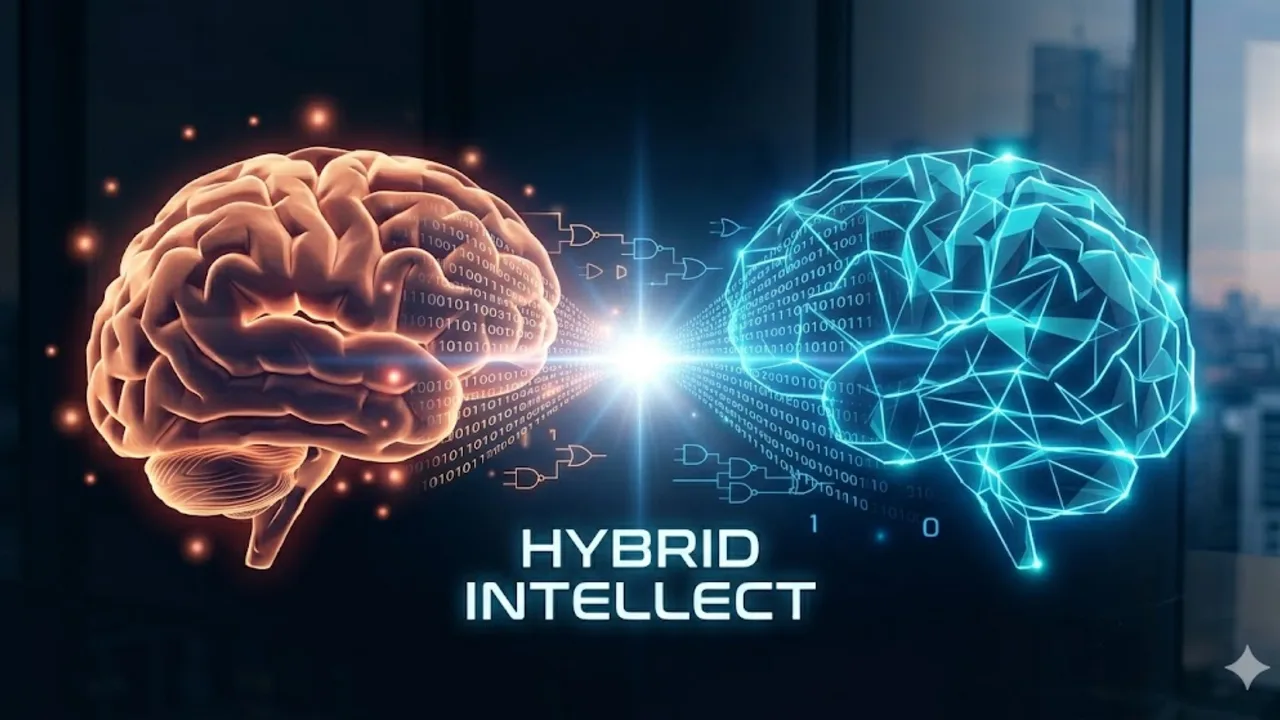
As we look toward the remainder of 2026, the distinction between “human choice” and “algorithmic output” is blurring. We are moving toward an era of hybrid intellect, where AI decision-making serves as the rational anchor for our emotional and creative human drives. Recognizing our own biases—and our tendency to view the machine as more logical than ourselves—will be the most critical skill for the next generation of global leaders.