
For decades, the standard for meeting documentation was the “designated note-taker”—a role usually assigned to the most junior person in the room. This method was inherently flawed. Humans are prone to bias, fatigue, and “selective hearing.” When we take notes, we filter information through our own understanding, often missing the subtle nuances that define a client’s true intent.
The first wave of digital transcription solved the “capture” problem. We could record everything. However, this created a new challenge: information overload. A one-hour meeting produces a 10,000-word transcript that nobody has the time to read. Enter the era of AI note takers. These tools don’t just record; they reason. They understand the difference between a casual suggestion and a firm contractual commitment.
The Technical Evolution: From Speech-to-Text to Contextual Intelligence
To understand the power of modern AI note takers, one must look at the shift in their underlying architecture.
1. The Transcription Layer
Early tools relied on Large Language Models (LLMs) simply to clean up audio. Modern systems use advanced neural networks that can distinguish between multiple speakers (diarization) even in crowded rooms or low-quality VOIP calls.
2. The Interpretive Layer
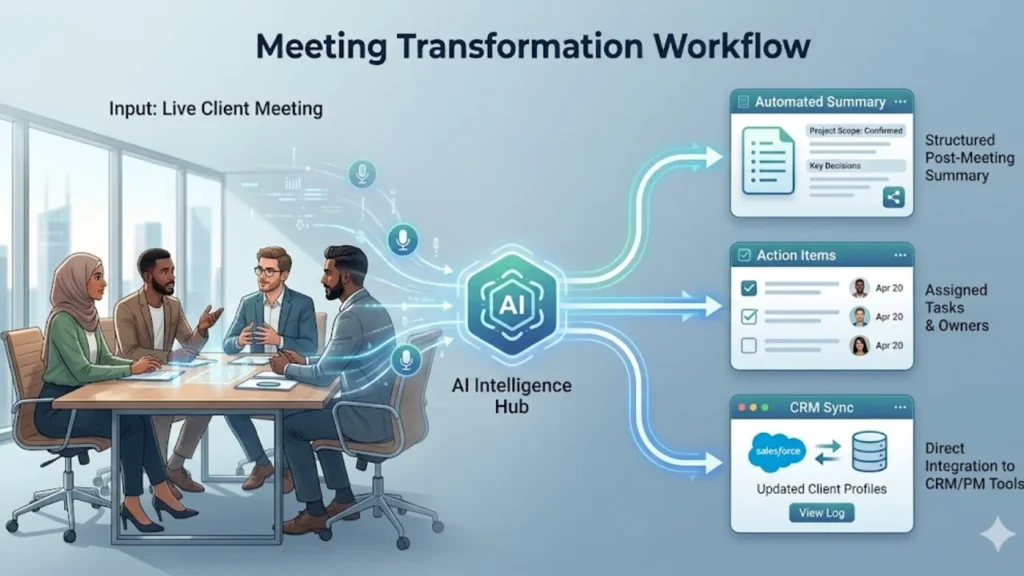
This is where the magic happens. Instead of a chronological log, the AI reorganizes the conversation into “Meaningful Units.”
-
Decisions Confirmed: Specific points where all parties agreed.
-
Action Items: Tasks assigned with specific owners and deadlines.
-
Sentiments: Detecting if a client was frustrated, hesitant, or enthusiastic about a proposal.
3. The Integration Layer
In 2026, an AI note taker is only as good as its ecosystem. The top-tier tools now push these insights directly into CRMs like Salesforce, project management tools like Asana, or proposal generators like OhSweet.
Reviewing the Market Leaders: The Top AI Note Takers of 2026
Depending on your industry, the “best” tool varies. Based on recent market analysis, these are the seven platforms defining the current landscape:
1. OhSweet: The Workflow Specialist
OhSweet is widely considered the best overall for consultative agencies. It doesn’t just store notes; it uses the meeting data to draft the next version of a project proposal or a client onboarding document automatically. It bridges the gap between “talking” and “doing.”
2. Supernormal: The Speed King
For high-volume sales teams, Supernormal is the gold standard. It produces a “Zero-Edit” summary within seconds of the call ending. This allows account managers to send a professional recap to the client before the client has even left their desk.
3. Notta.ai: The Multilingual Powerhouse
In a globalized economy, language is a barrier no more. Notta.ai excels at transcribing and summarizing meetings held in multiple languages and accents simultaneously, making it the primary choice for cross-border consultancies.
4. Avoma: The Lifecycle Manager
Avoma treats meetings as a sequence. It links today’s discussion to the agenda of last month’s meeting, ensuring that “lost” threads are brought back to the surface. It is the ultimate tool for long-term account management.
Why AI Note Takers are Essential for Client Accountability
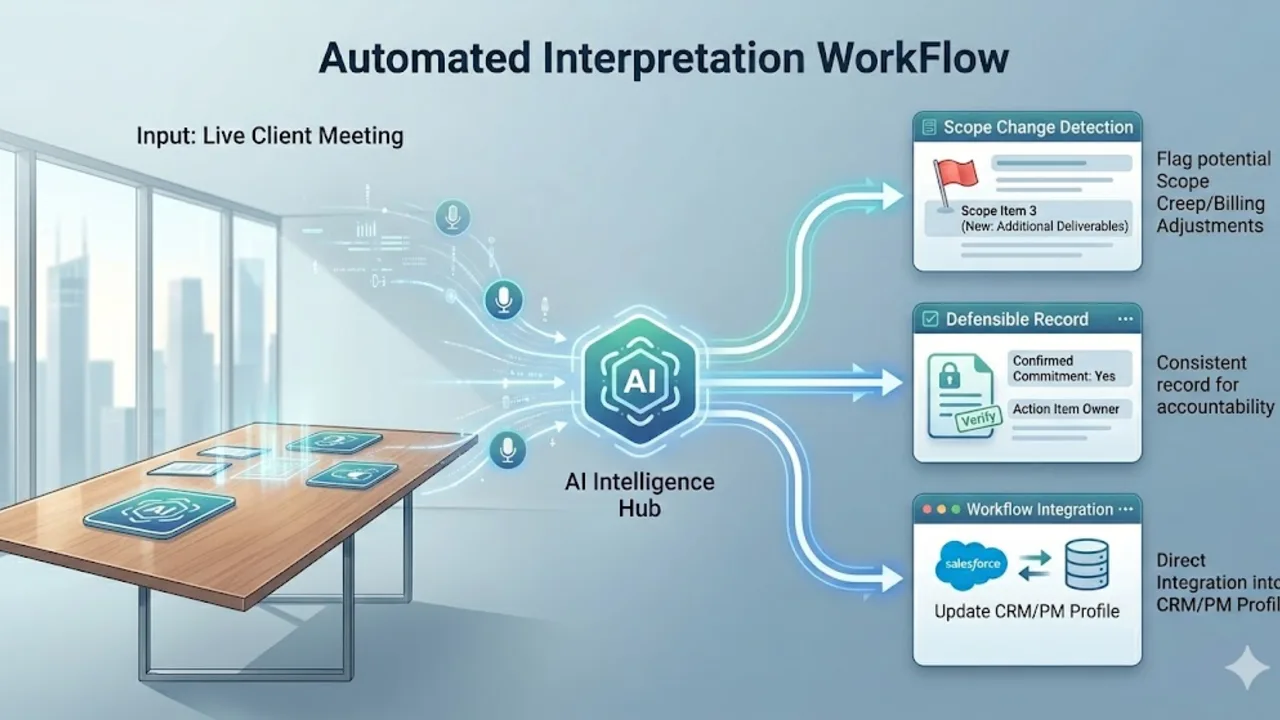
In professional services, documentation isn’t just about memory; it’s about defensibility.
Preventing “Scope Creep“
One of the most expensive drains on an agency is scope creep—when a client informally asks for “one small change” during a call, and the team executes it without a billing adjustment. AI note takers flag these moments as “Potential Scope Changes,” giving project managers the evidence they need to renegotiate terms immediately.
Maintaining Institutional Memory
When a lead consultant leaves a firm, they often take years of client nuance with them. With an AI-driven searchable archive, the new consultant can search for “Client’s preference on color palettes” or “History of budget objections” and get a full summary of every relevant conversation held over the last three years.
Addressing the Elephant in the Room: Privacy and Ethics
As we lean more heavily on AI note takers, concerns regarding data security have surfaced.
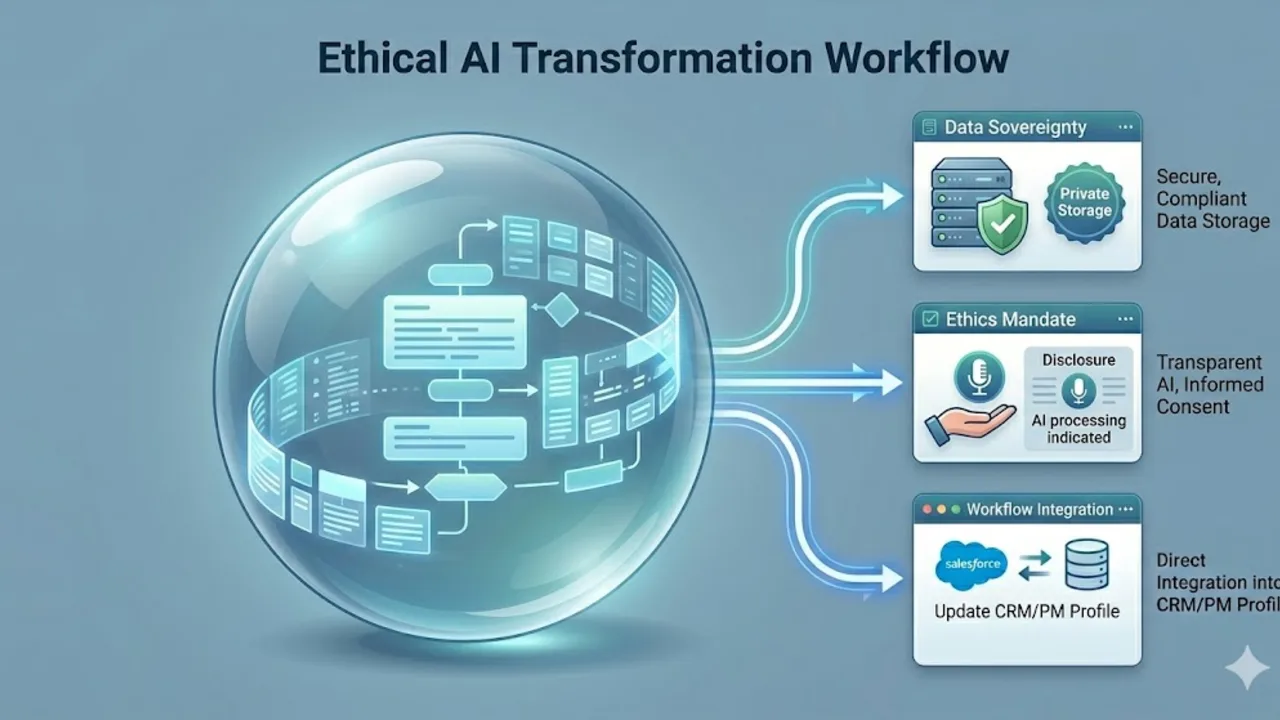
Data Sovereignty
Reputable AI platforms in 2026 now offer “On-Prem” or private cloud storage. This ensures that sensitive client negotiations aren’t being used to train public AI models.
The Consent Mandate
Regulations vary by jurisdiction, but the ethical standard has shifted toward “Transparency by Default.” Most AI note takers now include an automated announcement or a visual indicator that the meeting is being processed by AI, maintaining trust between all participants.
The Operational Risks of “Going Manual”
If your organization is still relying on humans to take notes, you are likely suffering from three hidden costs:
-
The Opportunity Cost: Your high-value employees are spending 20% of their time on administrative summaries rather than strategy.
-
The Rework Cost: Misunderstandings from undocumented calls lead to teams building the wrong features or drafting the wrong contracts.
-
The Credibility Gap: In an era where clients expect instant recaps, a three-day delay in sending meeting minutes makes an organization look antiquated.
Conclusion: The Path Forward
The transition to AI note takers is no longer a matter of “if,” but “how fast.” As these tools move from transcription to predictive reasoning, they will soon start suggesting the best “next steps” before the meeting has even concluded.
For businesses looking to thrive in the late 2020s, the goal is simple: Stop transcribing and start listening. Let the AI handle the memory, so your team can handle the relationship.