
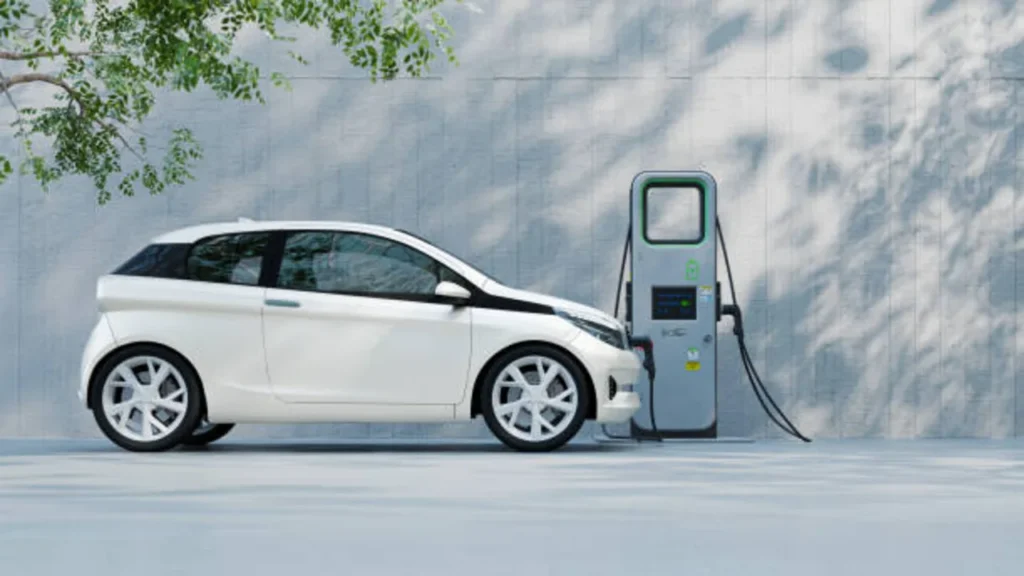

How the 2026 Oil Shock Accelerated the Global Transition to Electrification
The Economics of the “EV Shield”
In the face of such volatility, the “EV Shield” has become a central term in financial planning. Current data reveals a massive divergence in the cost of mobility. While traditional internal combustion engine (ICE) owners are hemorrhaging disposable income, the nearly two million EV drivers currently on UK roads are projected to pay roughly £1 billion to run their vehicles over the next 12 months. In contrast, those same miles would cost £2.5 billion if fueled by petrol or diesel.
The Shielding Effect and Domestic Decoupling
The primary advantage of the EV in 2026 is its ability to decouple transport from foreign policy. By utilizing “British electrons”—power generated by domestic wind, solar, and nuclear assets—drivers are effectively opting out of the volatility of Middle Eastern oil markets. This shielding effect is not merely theoretical; it is visible in the 30% surge in used EV searches, as buyers realize that even an older electric model offers a lower total cost of ownership compared to a “cheap” petrol car during an oil crisis.
Consumer Psychology and the “Homework” Phase
The 2026 crisis has matured the consumer. We are no longer in the phase of “early adopters” who buy for the novelty. Instead, we have entered the “Homework Phase.” Data from major automotive platforms indicates that while enquiries for new EVs have jumped by 23%, the nature of these enquiries has changed. Buyers are spending significantly more time on technical tools: calculating KWh costs, mapping out local rapid-charging networks, and investigating vehicle-to-home (V2H) capabilities.
Market Trends and Brand Performance
The crisis-era buyer is looking for efficiency and value. This is reflected in the most-searched models of 2026. While Tesla’s Model 3 remains a dominant force, there is significant momentum for more accessible entrants like the Renault 5 and the Vauxhall Frontera Electric. Perhaps most notably, the BYD Seal has shown the largest month-on-month enquiry growth, signaling that Chinese manufacturers are successfully positioning themselves as the go-to providers for those looking to “break up” with petrol as quickly as possible.
Geopolitical Independence through Electrification
Beyond individual savings, the mass pivot to EVs is increasingly viewed through the lens of national security. Every EV on the road represents a reduction in a nation’s vulnerability to “energy blackmail.” Experts from the Energy and Climate Intelligence Unit (ECIU) argue that accelerating the transition is the only way for the UK to end its dependency on foreign oil regimes.
This has put immense pressure on governments to hold the line on green policies. Despite the temptation to roll back environmental regulations to ease immediate industrial costs, the Green Alliance emphasizes that the long-term benefits of “cleaner, cheaper electric driving” far outweigh the short-term relief of fossil fuel subsidies. The narrative has shifted: electrification is no longer just about “saving the planet”; it is about “saving the sovereignty” of the domestic economy.
The Global Ripple Effect: A Multi-Continental Shift
The “Electric Pivot” is not a Western phenomenon; it is a global exodus from oil. Southeast Asia, long a stronghold for the internal combustion engine, is seeing unprecedented growth. In Vietnam, the national champion Vinfast reported a 127% surge in sales this March. In Japan, South Korea, and New Zealand, EV registrations have more than doubled in a single month as the realization sets in that the Strait of Hormuz closure is a systemic, long-term threat to Asian energy security.
The India Factor
India’s 50% rise in EV interest is perhaps the most significant indicator for the Global South. For a country with massive import requirements, the 2026 oil shock has made the transition to electric two-wheelers and buses a matter of fiscal survival. This multi-continental shift suggests that the demand for oil is facing a “permanently lower ceiling” as the world’s fastest-growing economies look for an exit strategy from the carbon economy.
Infrastructure and The “Last Mile” Challenges
Despite the enthusiasm, the transition is not without its friction points. The surge in interest has highlighted the “Last Mile” infrastructure gap. As more people move toward electric mobility, the pressure on local charging networks and national grids has intensified. The consumer “homework” mentioned earlier often reveals a lack of rapid-charging points in rural areas or high-density housing developments.
To mitigate this, 2026 has seen a rise in “Smart Charging” initiatives. These systems allow EVs to buffer the grid, charging when wind and solar production are high and discharging during peak demand. This resilience is crucial during an energy crunch, as it prevents the grid from becoming overloaded while keeping costs low for the driver. It turns the vehicle from a passive consumer into an active participant in the energy ecosystem.
Conclusion: A One-Way Street
The year 2026 will be remembered as the point where the “Age of Oil” faced its final, systemic decline in the world of personal transport. While the petrol engine will not disappear tomorrow, the gravity of the market has shifted irreversibly. The combination of geopolitical instability, soaring pump prices, and the undeniable cost-efficiency of “domestic electrons” has created a one-way street toward electrification.
As the conflict in the Middle East continues to reshape global alliances, the drivers who have made the switch to electric find themselves in a rare position of stability. They are shielded from the shocks of a volatile world, driving toward a future where mobility is powered by the wind and sun rather than the precarious flow of tankers through a narrow strait. The “Electric Pivot” is no longer a choice; it is the blueprint for survival in the mid-21st century.