
Global energy markets are facing growing uncertainty as geopolitical tensions in the Middle East intensify. Iranian officials have warned that oil prices could surge dramatically, potentially reaching $200 a barrel, if the current conflict continues to disrupt shipping and energy supply routes.
The warning comes amid escalating military activity in the Persian Gulf and growing concerns about the stability of one of the world’s most important energy corridors. With oil tankers under threat and shipping routes increasingly unsafe, markets are reacting quickly to the possibility of a prolonged supply disruption.
Rising Conflict and Threats to Oil Supply
The situation has worsened following military strikes involving Iran and its adversaries, which have triggered retaliatory threats across the region. Iranian officials have stated that vessels connected to the United States, Israel, or their allies could be considered legitimate targets if they attempt to move oil through strategic waterways.
One of the biggest concerns is the Strait of Hormuz, a narrow maritime passage connecting the Persian Gulf with the open ocean. This route is responsible for transporting a significant portion of the world’s crude oil supply. Any disruption in this area immediately sends shockwaves through global energy markets.
Iranian military representatives have warned that they will not allow oil shipments benefiting their adversaries to pass through the strait. According to these officials, continued military pressure could trigger broader attacks on energy infrastructure and shipping traffic in the region.
As tensions increase, analysts warn that even temporary disruptions could significantly tighten global supply and push oil prices far higher than current levels.
Attacks on Commercial Ships
Recent incidents at sea have intensified fears that the conflict could escalate into a wider maritime crisis. Multiple commercial vessels traveling near the Strait of Hormuz have reportedly been struck by projectiles or attacked by armed boats.
One cargo ship suffered severe damage and caught fire, forcing crew members to abandon parts of the vessel during the emergency response. Several other ships in the area were also hit or damaged during the incidents, raising alarms among shipping companies and maritime insurers.
These attacks have already begun affecting global shipping routes. Many tanker operators are reconsidering whether it is safe to pass through the strait, and some vessels have been rerouted or delayed as the security situation continues to deteriorate.
If shipping companies begin avoiding the route altogether, the consequences for oil supply chains could be immediate and severe.
Why the Strait of Hormuz Matters
The Strait of Hormuz is widely considered the most important chokepoint in the global energy trade. Millions of barrels of crude oil and large volumes of liquefied natural gas pass through this narrow passage every day.
Major energy exporters in the region rely heavily on this route to reach international markets. Countries such as Saudi Arabia, Iraq, Kuwait, and the United Arab Emirates ship much of their oil through the strait.
Because so much of the world’s oil supply depends on this corridor, even a temporary disruption can lead to rapid price spikes. When traders believe supply may be restricted, futures markets react almost instantly.
This sensitivity is exactly why warnings about potential blockades or attacks are taken so seriously by global energy markets.
Oil Market Reaction
Energy markets have already shown signs of volatility as the crisis unfolds. Oil prices surged earlier in the week after news of attacks on shipping vessels and reports that military activity in the region was expanding.
Although prices fluctuated during trading sessions, the market remains highly sensitive to any new developments in the conflict. Traders and analysts are closely monitoring whether shipping through the Strait of Hormuz can continue safely.
Some energy analysts believe that if tanker traffic through the strait is significantly reduced or halted, oil prices could climb rapidly.
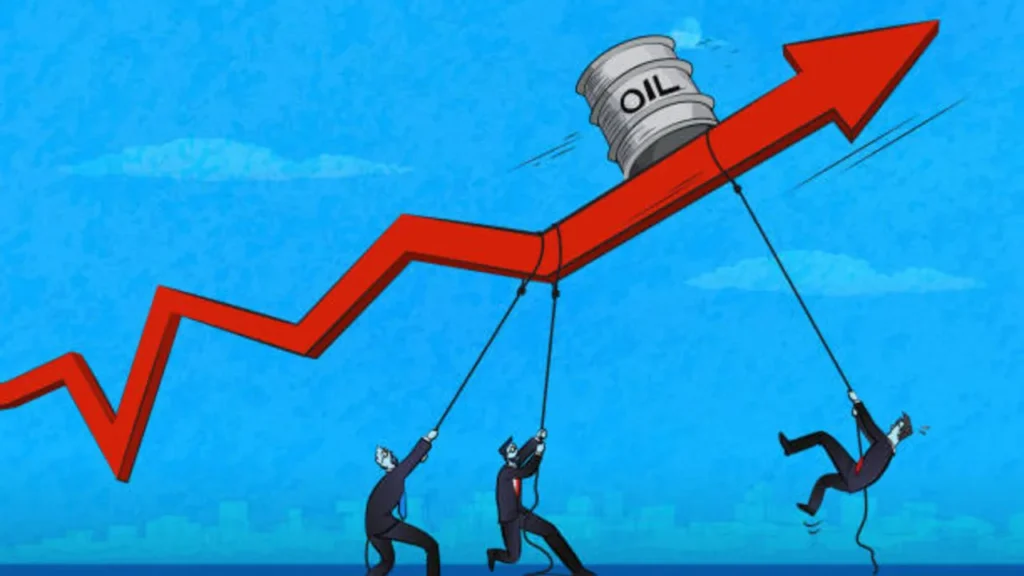
Under worst-case scenarios, prices approaching $200 a barrel are considered possible, particularly if the conflict spreads further or continues for an extended period.
Strategic Oil Reserves and Emergency Measures
Governments and international organizations are already preparing contingency plans in case the situation escalates further.
One possible response is the release of oil from strategic reserves. Several countries maintain emergency stockpiles designed specifically to stabilize markets during supply shocks.
By releasing stored crude oil into the market, governments can temporarily increase supply and reduce panic buying. However, analysts note that such measures are typically short-term solutions.
If the underlying disruption to shipping routes continues, reserve releases may slow price increases but will not fully replace the lost supply.
Broader Economic Implications
A dramatic increase in oil prices would have consequences far beyond the energy sector. Oil remains a critical input for transportation, manufacturing, agriculture, and electricity generation in many parts of the world.
When crude oil prices rise sharply, the cost of gasoline, diesel, and jet fuel usually follows. This can lead to higher transportation costs, rising food prices, and increased inflation across multiple industries.
For countries that rely heavily on imported energy, a spike toward $200 oil could place enormous strain on national economies.
Developing countries are particularly vulnerable because energy costs represent a larger share of their economic activity. Even advanced economies could face significant pressure if fuel prices remain elevated for an extended period.
Uncertain Outlook for Energy Markets
The future trajectory of the global oil market now depends heavily on how the geopolitical situation evolves. If tensions ease and shipping lanes reopen fully, prices could stabilize relatively quickly.
However, if military actions intensify or the Strait of Hormuz becomes effectively blocked, the global energy system could face one of its most severe disruptions in decades.
Markets are therefore watching the region closely, with every new development capable of moving prices dramatically.
For now, the warning from Iranian officials about oil prices reaching $200 a barrel serves as a stark reminder of how fragile global energy supply chains can be when geopolitical tensions escalate.