
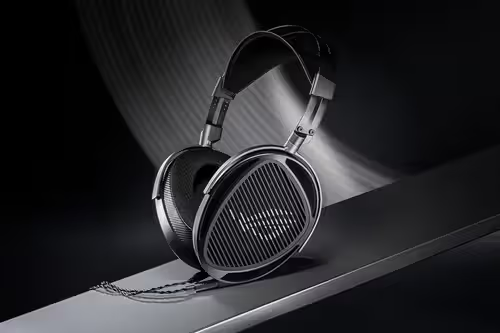

The gaming audio world just leveled up with the arrival of the ASUS ROG Kithara planar gaming headset. Designed in collaboration with HIFIMAN — one of the biggest names in audiophile technology — this new headset aims to bridge the gap between competitive gaming precision and high-end sound performance. Instead of chasing flashy RGB or wireless gimmicks, ASUS went all-in on what matters most: pure, accurate, and immersive sound.
Why the ROG Kithara Matters
In an era when most gaming headsets prioritize marketing buzzwords, the ROG Kithara planar gaming headset stands out for its engineering substance. The goal is clear: deliver the kind of sonic accuracy that satisfies audiophiles, while offering comfort and versatility gamers actually need. Whether you’re tracking footsteps in an FPS or sinking into a cinematic soundtrack, the Kithara promises clarity that few gaming headsets can match.
Planar Magnetic Drivers — The Heart of the Sound
The Kithara isn’t built like your average gaming headset. Its 100 mm planar magnetic drivers — co-developed with HIFIMAN — use a thin diaphragm sandwiched between two magnets. This tech delivers faster response, ultra-low distortion, and a flat frequency curve that keeps audio honest. Instead of boomy bass or exaggerated highs, you get detailed mids, precise treble, and bass that feels controlled, not muddy.
For audiophiles familiar with planar headphones like the HIFIMAN Sundara or Audeze LCD series, this design philosophy will sound familiar — only now, it’s wrapped in ROG’s gaming DNA.
Open-Back Design for a Wider Soundstage
Unlike most closed-back gaming headsets that trap sound, the ASUS ROG Kithara embraces an open-back design. This allows air and sound to flow naturally through the earcups, creating a spacious, lifelike soundstage. In practice, that means you can easily pinpoint in-game audio sources — from enemy movements behind walls to the echo of gunfire across a map.
For music lovers, the open-back structure also makes the listening experience more natural and less fatiguing. It’s like sitting in a small studio room instead of a sealed chamber — clean, airy, and full of dimension.
Frequency Range and Sound Profile
The Kithara offers a mind-bending frequency response from 8 Hz to 55 kHz. That’s more than double the typical range of mainstream gaming headsets. This extra bandwidth allows subtle micro-details — like reverb trails, breathing effects, and string resonance — to come alive.
In competitive gaming, this means improved situational awareness. In media playback, it means breathtaking clarity and spatial realism that rivals audiophile headphones priced much higher.
Connectivity and Compatibility
ASUS decided to keep things wired — a deliberate move that prioritizes signal integrity and zero-latency performance. The ROG Kithara planar gaming headset ships with:
- A 3-in-1 detachable cable system (4.4 mm balanced, 3.5 mm, and 6.3 mm plugs)
- A full-band MEMS boom microphone cable with separate audio lines to prevent crosstalk
- A USB-C to dual 3.5 mm adapter for console or PC setups
From gaming PCs to DAC/AMP setups, the Kithara plays nice with nearly everything. The inclusion of a 4.4 mm balanced output is a nod to serious listeners who value channel separation and noise reduction — a rare feature in the gaming space.
Microphone Clarity Worth Noting
While planar headphones usually skip the mic, ASUS made sure communication wasn’t an afterthought. The included MEMS boom mic covers a full 20 Hz–20 kHz range, capturing vocals with studio-grade clarity. Whether you’re coordinating with teammates or streaming live, your voice cuts through with natural tone and zero hiss.
Comfort and Build Quality
ASUS built the ROG Kithara for long sessions. It uses a lightweight aluminum frame, suspended headband, and soft hybrid-fabric cushions that balance breathability and isolation. The open-back cups reduce heat build-up, letting players or music listeners wear it for hours without discomfort.
Every material feels intentional — from the reinforced cable sheath to the subtle brushed metal on the yokes. There’s no excessive branding, just premium finish and smart design.
Real-World Performance
For Gaming
Plug the Kithara into a DAC and launch your favorite shooter — positional cues instantly become sharper. The planar drivers give each sound its place, helping you track reloads, footsteps, and ambient reverb in three-dimensional space. In competitive games like Valorant or CS2, that clarity can make the difference between reaction and anticipation.
For Music
Switch over to music and you’ll notice how balanced the tuning feels. Bass hits low but stays tight, mids are open and smooth, and treble sparkles without harshness. Tracks from jazz to metal benefit from the planar speed — percussion sounds immediate, vocals are clean, and there’s no artificial boost anywhere in the spectrum.
For Movies or Creative Work
When paired with a good DAC/AMP, the Kithara’s wide soundstage and resolution also make it a solid choice for video editing or film scoring. You can actually hear spatial detail in surround mixes that gets lost on typical gaming headsets.
Pros and Cons Breakdown
| Category | Strength | Note |
|---|---|---|
| Sound Quality | Exceptional clarity from planar drivers | Comparable to hi-fi headphones |
| Build Quality | Durable, premium materials | All-metal frame, detachable cables |
| Comfort | Light and breathable | Ideal for long sessions |
| Connectivity | Balanced & single-ended cables | No wireless option |
| Price | High-end segment | Targets serious listeners |
Price and Availability
At launch, the ASUS ROG Kithara planar gaming headset retails around $299 – $359 USD, depending on region. It’s already available in select markets and through ASUS’s official store. The price may look steep for a gaming headset, but compared to audiophile planar cans, it’s actually competitive.
How It Stacks Up Against Competitors
Compared to something like the Audeze Maxwell 2 or the SteelSeries Arctis Nova Pro, the Kithara is refreshingly pure. There’s no wireless latency, no heavy software layers — just hardware that performs. It’s for the gamer who’d rather pair a good DAC than charge batteries every night.
Even outside gaming, it challenges dedicated hi-fi models from HIFIMAN or Sennheiser in tonal balance and imaging. That’s a bold claim, but the partnership between ASUS and HIFIMAN clearly paid off in tuning precision.
Verdict: A True Crossover Between Gaming and Audiophile Gear
The ROG Kithara planar gaming headset proves that serious audio can belong in the gaming world without compromise. ASUS didn’t chase mass appeal — it targeted enthusiasts who understand the value of planar precision, open-back acoustics, and wired fidelity.
It’s not for everyone — casual players might find it overkill — but for content creators, streamers, or competitive gamers who also appreciate high-resolution music playback, this headset feels like the sweet spot between performance and purity.
If you’re building a premium setup — especially with a DAC/AMP chain or desktop rig — the Kithara deserves a place on your shortlist. ASUS has officially joined the ranks of brands that understand what real sound should be.
Final Thoughts
With its balance of comfort, craftsmanship, and acoustic performance, the ASUS ROG Kithara planar gaming headset is easily one of the most exciting wired releases in recent memory. It may not come cheap, but for gamers who take sound seriously, it delivers every decibel of value.
Learn more about high-end gaming headsets and planar magnetic technology on the official ASUS ROG site.