
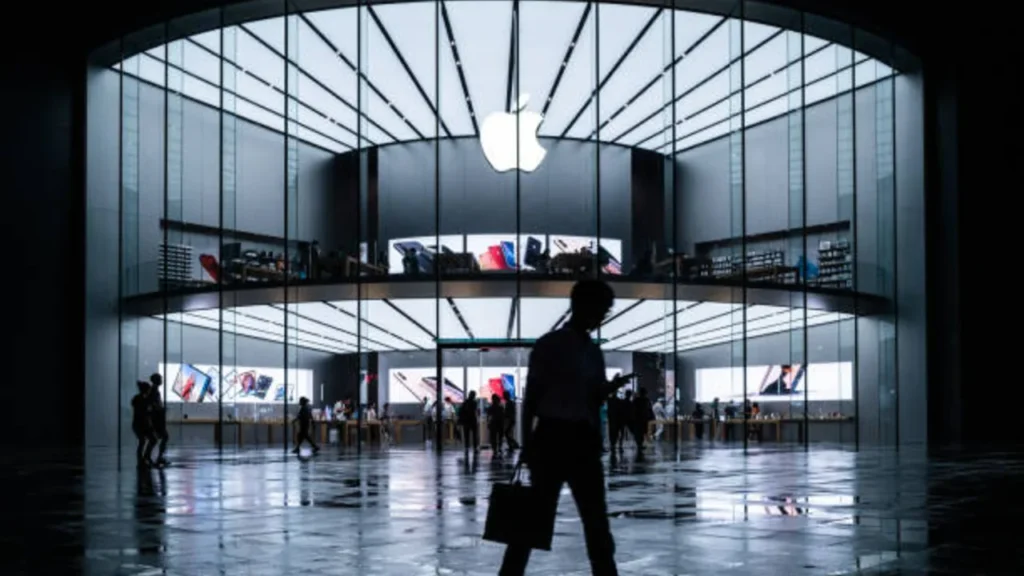

The Apple 2026 product lineup is shaping up to be one of the company’s most ambitious hardware cycles in recent years. From the anticipated iPhone 17e to refreshed MacBook Pro M5 laptops and next-generation iPads, Apple appears ready to redefine performance, design, and AI-driven user experience across its ecosystem.
Apple’s 2026 Strategy: Refinement Over Rush
Apple has traditionally followed a predictable rhythm of annual updates, but the Apple 2026 product roadmap reveals a shift. Instead of pushing minor refreshes, the company is pacing releases to coincide with major silicon and display advancements. Reports from Bloomberg’s Mark Gurman indicate that new MacBook Pro and MacBook Air models originally slated for 2025 are now moving to 2026 — a strategic delay that aligns with the debut of the powerful M5 chipset.
The delay underscores Apple’s intent to ensure that every new Mac delivers a substantial leap in efficiency, battery life, and AI performance. Rather than racing competitors, Apple is setting the stage for a cohesive hardware-software experience that extends across Mac, iPad, and iPhone devices.
MacBook Pro M5: The Powerhouse of Apple’s 2026 Product Cycle
The upcoming MacBook Pro M5 is widely expected to headline the Apple 2026 product lineup. Following the 2024 M4 release, the M5 generation is expected to deliver up to 30% faster multi-core performance and significant GPU gains optimized for on-device AI tasks under Apple Intelligence.
::contentReference[oaicite:0]{index=0}
Design-wise, Apple is expected to maintain the familiar chassis through 2026, making this the final iteration before a major overhaul in 2027 that introduces OLED displays and slimmer bezels. This approach gives engineers time to perfect thermals and panel manufacturing while ensuring long-term reliability.
Expected MacBook Pro M5 Specifications
- Chipset: Apple Silicon M5 (3-nm architecture)
- Display: 14 in / 16 in Liquid Retina XDR with mini-LED backlight
- Performance: Up to 30% improvement in multi-thread tasks
- Battery Life: Up to 24 hours on macOS Sequoia
- Connectivity: Wi-Fi 7 and Thunderbolt 5 support
For professionals, the M5 MacBook Pro represents a long-term investment — a machine built for creative production, AI-based editing, and sustainable efficiency over speed alone.
iPhone 17e: Apple’s Mid-Range Champion for 2026

Among the most anticipated Apple 2026 products is the iPhone 17e, a successor to the iPhone 16e that launched at $600. Positioned as Apple’s mid-range offering, the 17e will target users seeking core iPhone performance without the premium price tag.
::contentReference[oaicite:1]{index=1}
While retaining the notch display instead of Dynamic Island, the iPhone 17e is expected to gain substantial upgrades:
- A19 Bionic chipset: Same processor as the flagship iPhone 17 series for AI-driven photo and voice features.
- Improved camera: Larger sensor for enhanced night mode and portrait clarity.
- Extended battery life: Optimized power efficiency via A19’s 3-nm node.
- New materials: Lightweight aluminum chassis with matte finish options.
Apple’s strategy for the 17e is clear — to win back price-sensitive consumers from Android alternatives such as Google’s Pixel 9a and OnePlus 13R while keeping them within the Apple ecosystem. If Apple adds a 90 Hz display and increased storage tiers, the iPhone 17e could become the most balanced mid-range phone on the market in 2026.
Expected iPhone 17e Specifications
| Feature | iPhone 17e (Expected) |
|---|---|
| Processor | A19 Bionic (3-nm) |
| Display | 6.1-inch Retina LCD (60 / 90 Hz) |
| Camera | Single 12 MP wide with larger sensor |
| Battery | Improved efficiency for 18 hours video playback |
| Price Range | From $599 USD |
iPad Air M4 and Entry-Level iPad Updates
Apple is also refreshing its tablet lineup as part of the broader Apple 2026 product strategy. A new entry-level iPad and the next-generation iPad Air are expected to launch in early 2026, just ahead of spring’s education season. These models will focus on chipset upgrades and software optimization for AI and productivity apps.
::contentReference[oaicite:2]{index=2}
Expected Highlights
- iPad (11th Gen): Upgraded to A16 Bionic for faster multitasking and graphic rendering.
- iPad Air (7th Gen): Powered by the M4 chip, bridging desktop-class performance and portability.
- Improved Apple Pencil Support: Refined latency and precision for design and note-taking.
- Updated iPadOS 21: AI-assisted multitasking and contextual widgets for workflows.
Apple’s goal is to re-energize its tablet segment without cannibalizing the Pro line. By positioning the Air M4 as a “prosumer” device, Apple can capture creative and education markets alike while keeping prices competitive.
A New External Mac Display on the Way
The Apple Studio Display has remained unchanged since its 2022 debut, but that may soon change. Industry sources suggest that Apple’s next external monitor is slated to join the Apple 2026 product catalog with a sleek new design and professional-grade panel specifications.
::contentReference[oaicite:3]{index=3}
Expected Display Upgrades
- Panel Type: OLED or Mini-LED with 120 / 144 Hz refresh rate.
- Resolution: 5K Retina or higher with HDR support.
- Ports: Thunderbolt 5 and HDMI 2.1 compatibility.
- Integrated A-series Processor: For AI-driven color calibration and ambient light adjustment.
This new monitor will likely serve as a companion to the Mac Studio and MacBook Pro M5, offering an ideal workflow for designers, editors, and developers seeking precision visuals and fast response times.
Broader Themes Across Apple’s 2026 Products
Beyond individual devices, the Apple 2026 product strategy is anchored around three core themes: integration, AI, and sustainability.
Integration and Cross-Device Continuity
Apple continues to tighten the synergy between its hardware and software ecosystems. Features like Universal Control, Handoff, and Apple Intelligence create a seamless workflow between Mac, iPad, and iPhone. By standardizing its M-series and A-series chip architectures, Apple ensures that apps run more efficiently and share data fluidly across devices.
AI-Powered User Experience
Apple’s AI push — branded as Apple Intelligence — is expected to be central to the Apple 2026 product lineup. It will enhance everything from photo correction to voice assistant response times while maintaining on-device privacy. Users can expect contextual suggestions, proactive notifications, and AI-based writing tools integrated directly into macOS, iOS, and iPadOS.
Sustainability and Repairability
With growing regulatory pressure in the EU and US, Apple is moving toward longer-lasting hardware and easier repairs. The 2026 models are likely to use more recycled aluminum and glass and feature modular components for screen and battery replacements. These efforts are expected to reduce carbon footprints and extend device lifespans beyond typical upgrade cycles.
Competitive Context: How Apple 2026 Products Stack Up
Apple’s 2026 lineup will enter a crowded market where competitors like Samsung, Google, and Microsoft are doubling down on AI hardware and foldable form factors. However, Apple’s strength remains its ecosystem cohesion — the way its products interconnect to offer a consistent, secure, and user-centric experience.
Rather than rushing into foldables, Apple appears focused on perfecting foundational technologies: high-efficiency silicon, OLED integration, and AI-native software. This approach ensures that every Apple 2026 product not only stands out on spec sheets but also delivers a refined daily experience.
What to Expect in the Next 12 Months
- Fall 2025: Launch of the iPhone 17 series featuring A19 Bionic and AI tools.
- Early 2026: Release of iPhone 17e and new iPad models (A16 & M4).
- Mid-2026: Debut of MacBook Pro M5 and MacBook Air M5 variants.
- Late 2026: Possible announcement of Apple’s next OLED Mac design and Studio Display 2.
For consumers, the coming year represents a chance to see how Apple balances innovation with practical longevity — delivering devices that are smarter, greener, and more connected than ever.
Final Thoughts: A New Era of Unified Hardware
The Apple 2026 product wave is not about radical reinvention but strategic refinement. Each device — from the iPhone 17e to the M5 MacBook Pro — demonstrates Apple’s commitment to blending AI intelligence, energy efficiency, and design durability into a single ecosystem.
Whether you’re a professional awaiting the next MacBook upgrade or a student eyeing the new iPad Air, 2026 will be a defining year for Apple’s hardware philosophy — proving that patience and precision can deliver a smarter future for every user.
For official updates and release announcements, visit Apple Newsroom.</