
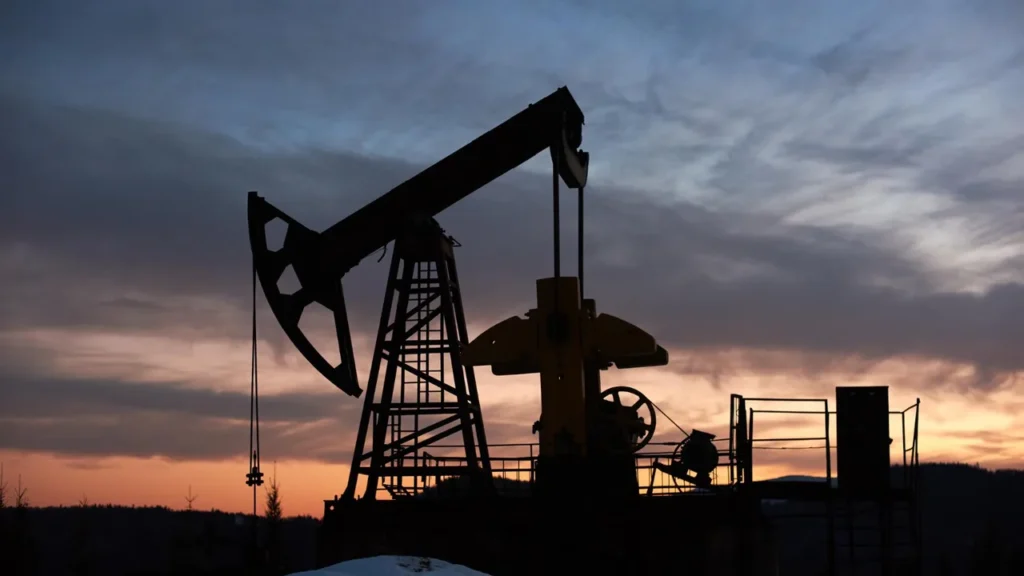

Global oil markets saw a modest lift as geopolitical tensions resurfaced, driven by fresh Ukrainian strikes on Russian energy infrastructure and a lack of progress in peace negotiations. While prices ticked upward, underlying concerns about oversupply and weak demand continue to shape traders’ expectations.
Ukrainian Strikes Intensify Pressure on Russian Oil Infrastructure
Renewed Attacks on the Druzhba Pipeline
Fresh developments added to rising oil prices geopolitical tension as Ukraine reportedly hit a section of the Druzhba pipeline in Russia’s Tambov region.
The Druzhba line remains one of Europe’s most important crude supply arteries, feeding key markets such as:
-
Hungary
-
Slovakia
-
The Czech Republic
This strike marks the fifth attack on the pipeline, yet both the operator and Hungarian officials confirmed that oil continued to flow normally.
Even without disruptions, the incident introduced new uncertainty, prompting traders to factor in future instability risks that continue to influence oil prices geopolitical tension across global markets.
Peace Negotiations Collapse Without Progress
Talks End With No Agreement
As military actions escalated, diplomatic discussions between Moscow and representatives of the Trump administration concluded with no breakthrough.
The lack of progress added another layer to oil prices geopolitical tension, which markets closely monitor.
Why This Matters for Global Energy Markets
A successful peace deal had the potential to reshape the energy landscape by:
-
Lifting or easing sanctions on Russian oil
-
Reducing barriers to crude exports
-
Restoring smoother flows across global supply chains
However, with negotiations stalled, hopes of quick sanctions relief faded. This reinforced market expectations that geopolitical pressure would continue to support oil prices geopolitical tension, even as broader fundamentals remain soft.
Market Reaction: Prices Rise Slightly But Momentum Remains Weak
Price Movement Shows Only Mild Support
Despite ongoing oil prices geopolitical tension, crude benchmarks posted only marginal gains.
Brent crude inched up 14 cents (0.22%) to settle at $62.81 per barrel, while West Texas Intermediate (WTI) rose 16 cents (0.27%) to $59.11 per barrel.
These minor increases illustrate a market still hesitant to commit to any meaningful rally. Traders are weighing short-term geopolitical risks against a backdrop of weakening global fundamentals.
In other words, oil prices geopolitical tension may spark temporary upward moves, but the broader market tone remains cautious.
Demand Weakness Continues to Cap Price Growth
Oversupply and Soft Consumption Lead the Narrative
Even with rising oil prices geopolitical tension, analysts emphasize that the real drag on the market comes from structural issues:
-
Global oversupply, driven by aggressive production from multiple regions
-
Sluggish demand, particularly from large consumers facing economic slowdowns
These factors overshadow geopolitical noise and prevent crude from gaining sustainable upward traction.
Market notes repeatedly highlight that the oversupply glut is a far bigger force than any short-term tension that typically fuels oil prices geopolitical tension headlines.
Short-Term Tension vs Long-Term Fundamentals
Although conflict-related incidents can create momentary price spikes, the market remains firmly grounded in macroeconomic realities.
Until consumption strengthens or supply tightens, geopolitical catalysts will likely generate limited and temporary effects.
Supply Outlook Weakens Further as Fitch Revises Projections
Lowered Oil-Price Forecasts for 2025–2027
Adding pressure to the already muted environment, Fitch Ratings revised its oil-price assumptions downward for the 2025–2027 period.
The agency’s updated forecast points to several persistent challenges:
-
Production is expected to grow faster than demand, widening the supply-demand imbalance
-
Inventories are likely to expand, reducing urgency in the market
-
Rebalancing timelines may extend, delaying any meaningful recovery in prices
These projections reinforce the overall bearish mood. Even when oil prices geopolitical tension temporarily boosts benchmarks, long-term signals remain soft, further dampening investor enthusiasm.
Conclusion: Geopolitical Heat vs Market Reality
Recent attacks on Russian infrastructure and stalled peace negotiations helped elevate oil prices geopolitical tension, offering slight upward pressure on crude.
However, the dominant forces shaping the market are still:
-
Structural oversupply
-
Weak global demand
-
Revised downward price expectations
Unless a substantial supply disruption occurs or consumption unexpectedly rebounds, crude is expected to continue trading within a limited range.
For now, geopolitical flashpoints may stir volatility, but fundamentals ultimately keep prices anchored.