
As global demand for renewable energy increases, offshore wind has become one of the fastest-growing power technologies in the world. While turbine size and engineering capabilities continue to advance, the true foundation of successful offshore wind projects lies in efficient offshore wind logistics. Logistics account for a significant portion of development costs and directly influence project timelines, safety, and overall feasibility. From port infrastructure and fabrication to marine transport and installation, offshore wind logistics determine whether a project stays on schedule or faces costly delays.
The complexity of offshore wind development requires highly coordinated supply chains, multi-stage delivery processes, specialized vessels, and precise timing windows aligned with weather patterns. As offshore projects scale in size—from 12 MW turbines to 20+ MW giants—the need for optimized offshore wind logistics becomes even more critical.
Understanding Offshore Wind Construction Logistics
Offshore wind projects involve hundreds of oversized components, long-distance transport, and marine operations that must be executed with precise synchronization. Effective offshore wind logistics ensure that blades, towers, nacelles, monopiles, jackets, cables, and substations move seamlessly from fabrication yards to ports and ultimately to offshore installation sites.
Why Logistics Drives Project Success
Logistics can represent 30–40% of total offshore wind project cost. Delays in transport or installation can cost millions per day due to vessel day rates, idle workforce, and weather disruptions. Strong offshore wind logistics reduce these risks while enabling faster construction schedules and higher project profitability.
Key Phases in Offshore Logistics
The logistics chain for offshore wind is divided into several critical phases:
- Fabrication: manufacturing turbine components, foundations, and cables.
- Transport: moving components from fabrication yards to staging ports.
- Storage: secure laydown of oversized items.
- Staging: preparation for offshore installation.
- Marine installation: using specialized vessels to install foundations, turbines, and cables.
The Foundation: Port Infrastructure for Offshore Wind
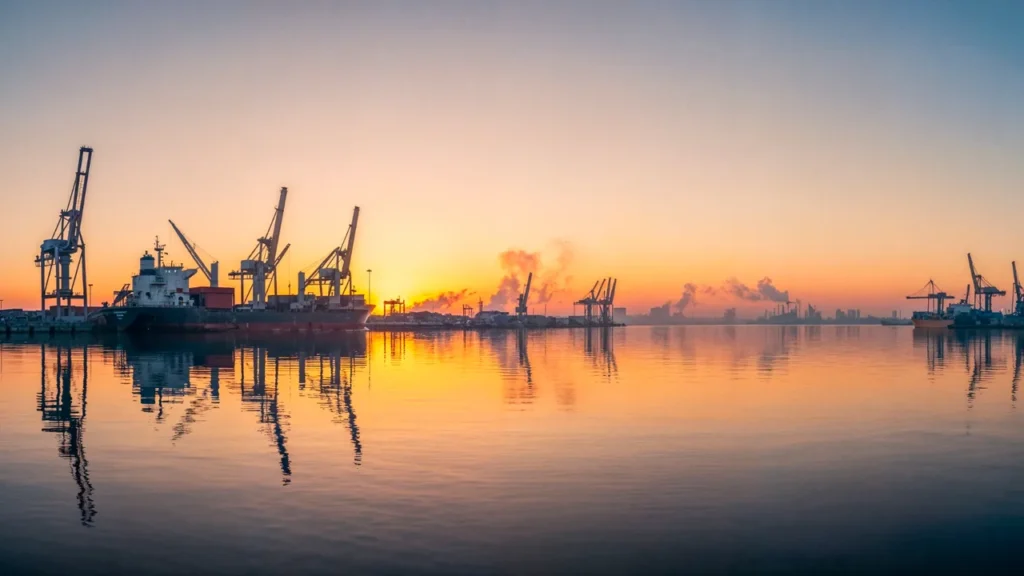
Ports are the backbone of offshore wind logistics. Without suitable port infrastructure, even well-engineered projects face severe delays. Ports support marshalling, pre-assembly, component handling, storage, and loading for offshore operations.
Requirements for Offshore Wind Ports
Due to the massive scale of turbine components, offshore wind ports require:
- Deep-water berths for heavy-lift vessels
- Heavy-load quays capable of supporting 20+ tons/m²
- Large laydown areas for blades, towers, and nacelles
- Specialized cranage for tower sections and monopiles
- Strong transport links to fabrication yards
Role of Ports in Staging and Assembly
Ports serve as staging hubs, allowing components to be inspected, pre-assembled, and prepared for final installation. Many turbine manufacturers use marshalling ports to store and assemble blades, nacelles, and towers before they are loaded onto jack-up vessels. Advanced offshore wind logistics rely heavily on efficient staging operations to minimize vessel downtime.
Challenges in Port Development
Only a limited number of ports worldwide currently meet offshore wind requirements. Upgrading port infrastructure requires long-term investment in dredging, quay strengthening, and heavy-lift equipment. Competition among developers for limited port capacity also creates scheduling bottlenecks that can impact offshore wind logistics.
Fabrication Logistics in Offshore Wind Projects
Fabrication of key offshore wind components—such as foundations, transition pieces, towers, and blades—requires highly specialized facilities. Efficient coordination between fabrication yards and ports ensures smooth delivery schedules and avoids costly delays.
Manufacturing of Towers, Monopiles, and Jackets
The fabrication phase involves heavy steel rolling, welding, coating, and quality inspection. As turbines increase in size, monopiles now exceed 120 meters in length and weigh more than 3,000 tons. These massive structures require fabrication yards located on coastlines to enable direct loadout into transport vessels—a critical part of offshore wind logistics.
Transportation From Fabrication Yard to Port
Oversized offshore wind components cannot be transported via standard road systems. Fabrication yards rely on:
- Self-propelled modular transporters (SPMTs)
- Waterfront fabrication halls
- Roll-on/roll-off (RoRo) loadout systems
Minimizing transport distance reduces handling risks and supports more efficient offshore wind logistics.
Coordination Between Fabrication & Port Teams
Just-in-time delivery is crucial to prevent port congestion. Fabrication schedules must align with port availability and vessel schedules. Coordination challenges often arise during peak project activity, and poor planning can lead to costly bottlenecks within the offshore wind logistics chain.
Component Transport and Marine Logistics
Marine logistics are among the most complex and expensive elements of offshore wind projects. Heavy-lift transport vessels, barge solutions, and jack-up installation ships must be carefully scheduled to avoid delays caused by weather or port congestion.
Specialized Vessels
Offshore wind installation requires purpose-built vessels such as:
- Heavy-lift vessels for monopiles and jackets
- Jack-up vessels for turbine installation
- Cable-laying ships for subsea cables
- Service operation vessels (SOVs) for maintenance
Vessel availability is a major constraint in offshore wind logistics as global demand continues to grow.
Distance, Weather Windows & Fuel Efficiency
Travel distance, wave height, wind speed, and seasonal weather patterns all influence marine operations. Advanced forecasting tools allow operators to identify optimal weather windows, reducing vessel downtime and improving offshore wind logistics performance.
Risk Mitigation in Offshore Transport
Heavy offshore components require strict load-securing procedures, structural reinforcement during transport, and compliance with marine insurance standards. These practices ensure safe delivery and minimize delays within the offshore wind logistics chain.
On-Site Installation Logistics
The final and most critical phase of an offshore wind project is installation. Successful installation depends on synchronized marine operations, precise lifting plans, and efficient offshore coordination. Strong offshore wind logistics ensure that each component—foundations, turbines, cables, and substations—arrives at the installation site in the correct sequence and condition.
Foundations Installation
Monopiles remain the most common foundation type for offshore wind farms, though jackets and gravity-based structures are also used depending on water depth and seabed conditions. Installing these massive structures requires:
- Heavy-lift vessels or floating cranes
- Dynamic positioning systems
- Hydraulic hammer systems for pile driving
Precise planning is essential since delays in foundation installation can disrupt the entire offshore wind logistics chain and significantly increase project costs.
Turbine Assembly at Sea
Turbine installation involves assembling tower sections, nacelles, and blades atop foundation structures. State-of-the-art jack-up vessels elevate above the water surface to create stable working platforms. Key constraints include:
- Wind speed thresholds for blade lifting
- Wave height limits for vessel stability
- Accurate alignment of tower and nacelle interfaces
The rapid growth in turbine sizes—now exceeding 15 MW—has increased the logistical complexity of offshore installation. Efficient offshore wind logistics are essential to ensure turbines are assembled safely within tight weather windows.
Cable Laying & Electrical Connection
Offshore wind farms require two main cable types: inter-array cables linking turbines and export cables delivering power to shore. Cable-laying vessels use precise GPS systems, tensioners, and burial tools to protect cables from damage. This phase is tightly linked with foundation and turbine installation schedules, underscoring the importance of integrated offshore wind logistics.
Comparing Logistics for Different Offshore Technologies
Different offshore wind technologies—fixed-bottom and floating—create distinct logistical challenges. Fixed-bottom turbines dominate shallow-water markets, while floating turbines are rapidly expanding into deeper waters. These variations significantly influence port needs, fabrication processes, vessel requirements, and staging operations.
| Criteria | Fixed-Bottom Wind | Floating Wind |
|---|---|---|
| Port Requirements | Moderate space, heavy-load quays | Very large assembly areas, deep-water ports |
| Fabrication Needs | Foundations built at fabrication yards | Full turbine + floating platform integration onshore |
| Marine Risk | Medium | High due to towing operations |
| Installation Timeline | Typically faster | Longer and more complex |
| Logistics Cost | Lower overall | Higher due to scale and towing |
Digital Tools Improving Offshore Wind Logistics
Emerging digital solutions are transforming how developers plan, execute, and monitor offshore wind projects. By integrating real-time data, predictive analytics, and engineering simulations, companies can streamline complex offshore wind logistics and reduce risk.
Digital Twins for Ports & Vessels
Digital twins simulate port operations, vessel movements, loadout processes, and offshore installation scenarios. These models:
- Identify congestion within port infrastructure
- Optimize vessel routing and scheduling
- Predict bottlenecks before they occur
Tracking & Real-Time Supply Chain Visibility
RFID tags, GPS tracking, and integrated logistics platforms allow developers to monitor turbine components throughout the entire supply chain. Enhanced tracking reduces miscommunication, improves component handling, and strengthens offshore wind logistics performance.
Predictive Weather Analytics
Weather delays are one of the biggest risks in offshore projects. Predictive weather systems help installation teams:
- Identify optimal lifting periods
- Plan safe towing and transport operations
- Minimize vessel idle time
By using predictive analytics, developers can significantly reduce downtime and improve workflow reliability.
Cost Drivers in Offshore Wind Logistics
Understanding the primary cost drivers helps developers allocate budgets efficiently and control overall project risk. The largest expenses in offshore wind logistics include vessel chartering, port operations, fabrication–port coordination, and installation delays.
Vessel Day Rates
Jack-up vessels and heavy-lift ships can cost $150,000 to $350,000 per day. Weather delays, port congestion, or component unavailability can quickly escalate costs. Efficient scheduling is therefore essential to maintain cost-effective offshore wind logistics.
Port Rental & Storage Fees
Offshore wind components require vast storage areas and extended rental periods. Port rental fees, handling charges, and laydown capacity limitations all influence logistics budgets. Ports optimized for offshore wind can minimize handling time and significantly reduce project overhead.
Fabrication–Port–Installation Coordination Costs
Misalignment between fabrication schedules, port readiness, and vessel availability is one of the biggest sources of cost overruns. Avoiding these issues requires a unified logistics strategy that synchronizes all stakeholders across the offshore wind supply chain.
Key Challenges Facing Offshore Wind Logistics
Despite rapid advancements in technology and infrastructure, several challenges continue to affect offshore wind project execution.
Port Capacity Limitations
Many regions lack ports that meet offshore wind requirements. Limited quay strength, insufficient laydown space, and outdated facilities restrict project timelines and weaken offshore wind logistics.
Vessel Shortages
The global offshore wind industry faces a shortage of jack-up and heavy-lift vessels. As turbines grow in size, existing vessels struggle to accommodate new dimensions. This gap between demand and fleet capacity is one of the biggest constraints on offshore wind logistics.
Environmental Hazards
Harsh offshore conditions—strong winds, large waves, and unpredictable weather—pose ongoing risks. Logistics teams must prepare for frequent delays and build safety buffers into schedules.
Strategies to Improve Offshore Wind Logistics Efficiency
Developers and EPC contractors can significantly improve logistics efficiency by adopting integrated planning methods and investing in modern infrastructure.
Integrated Supply Chain Management
A unified logistics platform aligns all stakeholders, including fabricators, ports, transport operators, and installation vessels. This reduces miscommunication, increases transparency, and ensures that materials flow smoothly throughout the project.
Investing in Next-Generation Port Infrastructure
Heavy-lift cranes, deep-water berths, extended marshalling areas, and digital equipment management systems are critical for future offshore wind development. Upgraded ports accelerate workflows and strengthen offshore wind logistics.
Standardizing Turbine Components
Standardization reduces engineering complexity, simplifies fabrication, improves transport efficiency, and shortens installation schedules. The more uniform turbine components become, the easier it is to optimize offshore wind logistics on a global scale.
Conclusion
Offshore wind is one of the most promising renewable energy technologies, but its success depends heavily on precise, efficient, and well-coordinated logistics. From fabrication and port infrastructure to marine transport and installation, every phase of offshore wind logistics must operate seamlessly to support large-scale wind farm development. As the industry expands into deeper waters and larger turbines, investments in modern ports, digital tools, and specialized vessels will be essential. Optimized offshore wind logistics not only reduce costs and risks—they also accelerate the global transition toward clean, sustainable energy.