
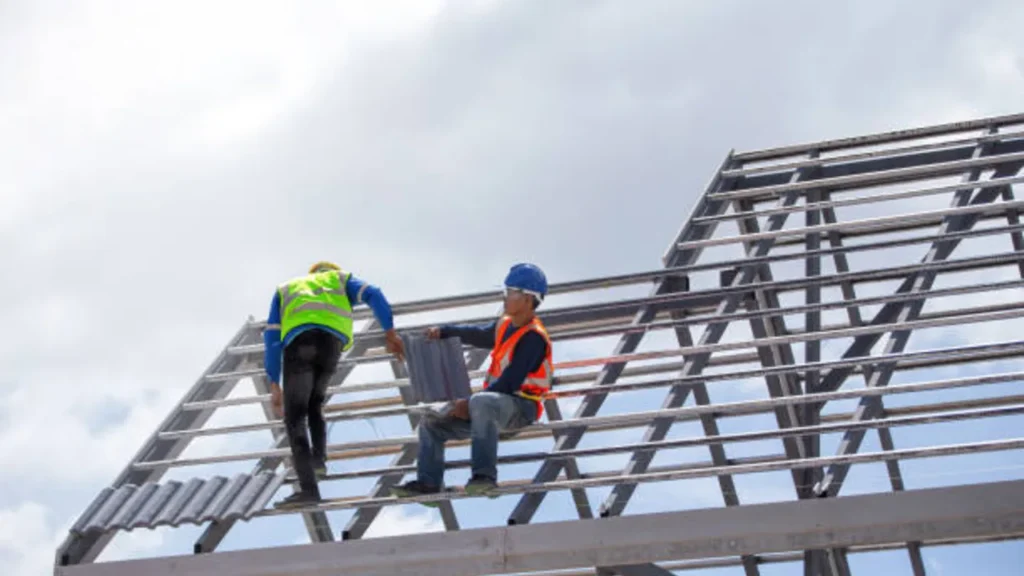

The global construction industry stands at a critical crossroads. As urban populations surge and climate targets tighten, the sector faces growing pressure to balance infrastructure expansion with environmental responsibility. Buildings and infrastructure account for nearly 40% of global carbon emissions, making the shift toward sustainable practices no longer optional but essential. In this transition, sustainable steel construction has emerged as one of the most powerful tools for shaping a greener, more efficient built environment.
Building Responsibly for the Future
Sustainability in construction goes beyond energy-efficient buildings — it redefines how materials are produced, used, and repurposed. Steel, once associated with heavy industry and high emissions, is now at the forefront of this transformation. Through innovation in manufacturing, recycling, and design, the steel industry is redefining what it means to build responsibly for the future. Sustainable steel construction blends engineering precision with environmental mindfulness, ensuring that every ton of steel contributes to a circular, low-carbon economy.
Governments, developers, and engineers are aligning efforts to integrate green materials and energy-efficient processes. From skyscrapers to bridges, steel’s unmatched strength, durability, and recyclability make it indispensable in modern sustainable construction.
Understanding Sustainable Steel Construction
At its core, sustainable steel construction refers to the design, fabrication, and erection of steel-based structures with minimal environmental impact across their entire life cycle. This approach emphasizes reducing carbon emissions during production, maximizing recycling rates, and extending the life span of buildings through adaptable design.
The philosophy is built upon the three pillars of sustainability:
- Environmental: Reducing waste, emissions, and resource consumption.
- Economic: Lowering lifecycle costs through efficiency and durability.
- Social: Ensuring safe, healthy, and resilient structures for communities.
Each pillar reinforces the others — a structure built with recycled steel not only cuts emissions but also saves costs and supports long-term safety standards.
The Environmental Impact of Steel and Path to Carbon Reduction
The steel industry is often seen as carbon-intensive, contributing around 7% of global CO₂ emissions. However, new manufacturing methods are rapidly changing this narrative. Technologies such as electric arc furnaces (EAF), which use recycled scrap instead of virgin iron ore, are helping achieve major carbon reduction. Unlike traditional blast furnaces, EAFs require significantly less energy and produce up to 70% fewer emissions.
Moreover, global steel producers are investing in renewable energy integration and carbon capture systems. Green hydrogen steelmaking — an innovation that replaces coal with hydrogen as the reducing agent — promises to revolutionize the sector. Pilot projects in Sweden and Germany have already demonstrated the viability of near-zero-emission steel production, marking a new chapter in sustainable steel construction.
Comparative CO₂ Emission by Building Material
| Material | CO₂ Emission (kg/m²) | Recyclability |
|---|---|---|
| Concrete | 250–350 | Low |
| Wood | 100–150 | Medium |
| Steel | 120–180 (and decreasing) | Very High (up to 98%) |
This data underscores that while steel once had a reputation for high emissions, its ability to be endlessly recycled and its continuous technological advancement make it one of the most sustainable structural materials today.
Recycling: The Backbone of Sustainable Steel
One of the defining advantages of sustainable steel construction is steel’s ability to be recycled infinitely without losing quality. Nearly 90% of structural steel used in construction today comes from recycled sources, making it the world’s most recycled material. This closed-loop recycling system minimizes resource extraction and energy consumption, driving down both costs and emissions.
The recycling process is remarkably efficient. Old beams, columns, or steel panels from demolished buildings are melted down and reformed into new components for bridges, warehouses, or high-rises. This process creates a truly circular lifecycle — where yesterday’s infrastructure becomes tomorrow’s foundation.
Economic and Environmental Benefits of Recycling
- Reduces landfill waste and conserves natural iron ore.
- Consumes 75% less energy than primary steelmaking.
- Supports local recycling industries and job creation.
- Reduces embodied carbon in new construction projects.
In addition to energy savings, recycled steel components often qualify for sustainability credits under international green building standards such as LEED and BREEAM. This makes recycling not only an environmental imperative but also a practical strategy for developers and architects aiming for high-performance green certifications.
Design for Disassembly and Reuse
Another important dimension of sustainable steel construction is designing buildings that can be disassembled and reused rather than demolished. By using modular designs, bolted connections, and standardized components, engineers make it possible to repurpose entire structures or their parts for future projects. This approach drastically reduces construction waste and extends the lifespan of valuable steel resources.
For instance, a warehouse constructed with prefabricated steel frames can be dismantled decades later and rebuilt in another location — maintaining both material value and structural integrity. This design philosophy transforms steel structures into long-term material banks, ready to serve multiple generations of construction needs.
Continue to Part 2 → covering green standards integration, case studies, future innovations, and circular economy outlook in sustainable steel construction.
Integrating Steel in Green Building Standards
Sustainability in construction is increasingly measured by internationally recognized rating systems such as LEED, BREEAM, and ISO 14001. These certifications assess buildings based on resource efficiency, carbon performance, and long-term resilience. The principles of sustainable steel construction align perfectly with these frameworks, making steel an essential material for achieving high sustainability ratings.
For example, LEED certification awards points for the use of recycled and regionally sourced materials. Since structural steel is often produced locally and can contain up to 98% recycled content, it contributes directly to achieving these credits. Similarly, BREEAM recognizes steel structures for their low waste generation, high reuse potential, and contribution to carbon reduction goals.
Beyond certifications, many countries now implement carbon disclosure and embodied carbon reporting for public projects. By adopting traceable and verifiable steel sourcing, construction firms can demonstrate environmental responsibility and align with emerging global standards.
Examples of Green Building Credits Achieved through Steel Use
| Standard | Category | How Steel Contributes |
|---|---|---|
| LEED | Materials and Resources | Recycled content, regional sourcing, reuse potential |
| BREEAM | Waste Management | Modular fabrication and recyclability |
| ISO 14001 | Environmental Management | Reduced emissions and efficient production |
Case Studies: Steel Projects Leading Sustainability
Around the world, architects and engineers are embracing sustainable steel construction to meet ambitious climate targets while maintaining design flexibility. These projects showcase the material’s potential to combine aesthetics, strength, and environmental performance.
1. The Bloomberg European Headquarters, London
This award-winning building utilized a highly efficient steel frame with recycled materials and passive energy design. The result: a 35% reduction in embodied carbon compared to conventional office towers. Its modular steel systems also allow for future reconfiguration without demolition.
2. Shanghai Tower, China
One of the tallest green skyscrapers in the world, the Shanghai Tower integrates high-strength structural steel with advanced energy-saving technologies. By optimizing material use and adopting wind-resistant steel cores, the project achieved significant carbon reduction throughout its construction process.
3. Stadium 974, Qatar
This innovative sports facility was constructed entirely from prefabricated steel modules and shipping containers. After the FIFA World Cup, it can be dismantled and relocated — a groundbreaking example of recycling and design for disassembly on a massive scale.
Each of these projects exemplifies the adaptability and long-term sustainability potential of steel. Whether for commercial towers, industrial facilities, or cultural landmarks, the principles of sustainable steel design are reshaping how the world builds.
Economic and Social Benefits
Beyond environmental gains, sustainable steel construction brings substantial economic and social advantages. Steel’s durability and long lifespan reduce maintenance costs and enhance building value. Its modular fabrication process shortens construction timelines, saving time and labor. This efficiency translates into lower lifecycle costs for developers and public institutions alike.
From a social perspective, steel buildings provide safer, healthier environments for occupants. Their ability to withstand earthquakes, fire, and extreme weather enhances community resilience. Moreover, the rise of green steel industries supports job creation in recycling, renewable energy integration, and low-carbon manufacturing — critical drivers of a sustainable economy.
Lifecycle Cost Comparison
| Cost Element | Concrete Structure | Steel Structure |
|---|---|---|
| Construction Time | Longer | Shorter (Prefabricated) |
| Maintenance | Frequent | Minimal (Coated Steel) |
| Reusability | Low | High |
| Total Lifecycle Cost | Higher | Lower |
Future Innovations in Sustainable Steel Construction
The future of sustainable steel construction lies in innovation and collaboration. Cutting-edge technologies are transforming how steel is produced, used, and managed throughout its lifecycle. Among the most promising advancements are:
- Green Hydrogen Steel: Replacing fossil fuels with hydrogen in steelmaking reduces carbon emissions by up to 95%.
- AI and Digital Twin Technology: Enables predictive maintenance, performance analysis, and material optimization.
- Carbon Capture and Storage (CCS): Captures industrial CO₂ emissions and reuses them in energy or manufacturing processes.
- BIM Integration: Building Information Modeling supports accurate material tracking, improving recycling and reusability rates.
These technologies illustrate that sustainability in steel construction is not a static goal but a continuously evolving pursuit. The combination of data-driven design, clean energy production, and circular material management will define the next generation of sustainable infrastructure.
Building a Circular Future
At its essence, sustainable steel construction is about more than reducing emissions — it’s about transforming the entire mindset of the construction industry. Steel offers a tangible path toward circularity, where materials flow endlessly through the economy without degradation or waste. Each recycled beam, modular frame, and carbon-neutral process moves humanity closer to a truly regenerative built environment.
To achieve global sustainability goals, collaboration across industries is key. Steel producers, architects, policymakers, and engineers must work hand in hand to ensure every building contributes to long-term ecological balance. Through continued innovation and responsible sourcing, the construction sector can lead the global fight against climate change while building stronger, smarter, and greener cities for generations to come.
For more insights into the concept of sustainable construction, visit the Sustainable Construction page on Wikipedia.