
In the era of accelerated industrialization and infrastructure growth, one construction innovation has emerged as the true backbone of global progress — the steel structure building. From skyscrapers and logistics centers to airports and industrial plants, steel structures have transformed how nations build, expand, and modernize. Their unmatched strength, speed of construction, and sustainability make them indispensable to modern development worldwide.
The Rise of Steel in the Age of Industrialization
Steel and the Birth of Modern Industry
The story of global progress is deeply intertwined with the rise of steel. During the Industrial Revolution, the transition from iron to steel marked a pivotal moment for humankind. Factories, bridges, and railways were built faster and stronger than ever before. As industrialization spread across continents, steel became the material of choice for large-scale engineering and infrastructure projects.
Today, over two billion tons of steel are produced annually, fueling construction booms in emerging economies and modern cities alike. This surge represents more than just material output—it symbolizes global ambition, progress, and resilience. Whether in Europe’s advanced urban hubs or Africa’s developing cities, the steel structure building remains a symbol of growth and modernization.
From Local Workshops to Global Infrastructure
Steel construction has evolved from small workshops to global supply chains. In Asia, countries like China and India lead in steel production and export. Their expertise in prefabrication, modular engineering, and rapid assembly has set new benchmarks for global construction efficiency. Across Africa and the Middle East, steel buildings are enabling rapid urbanization, empowering new industrial zones and economic corridors.
Behind this evolution are specialized experts known as steel structure companies. These firms handle complex processes—from design and fabrication to on-site erection—ensuring projects meet international standards for safety, precision, and durability.
Core Advantages of Steel Structure Buildings
Strength, Durability, and Safety
Every steel structure building is engineered to withstand extreme conditions, from earthquakes to high wind loads. Steel’s superior tensile strength allows architects to design large-span spaces like stadiums and warehouses without the need for internal support columns. Compared to concrete structures, steel offers longer life expectancy, enhanced fire resistance, and higher load-bearing capacity.
In seismic-prone regions, the flexibility of steel frameworks absorbs and redistributes energy, preventing structural failure. This durability is a key reason why governments and developers continue to favor steel in mission-critical projects such as airports, industrial zones, and data centers.
Speed and Efficiency in Construction
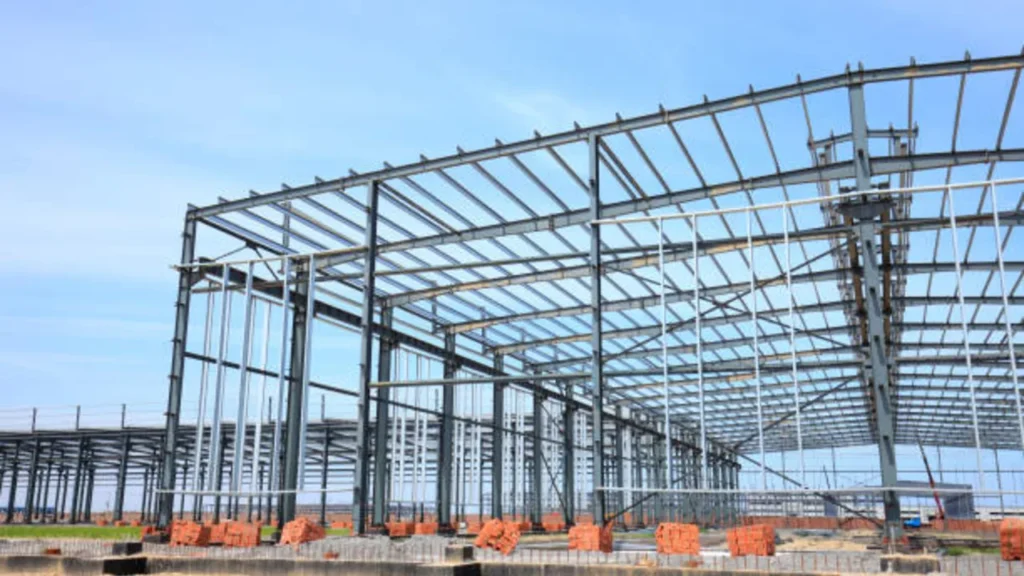
Prefabrication technology has revolutionized modern construction. In a steel structure building, components such as beams, columns, and trusses are pre-manufactured in factories and assembled on-site with remarkable precision. This minimizes human error, reduces construction time, and cuts down waste.
| Construction Type | Average Completion Time | Material Waste |
|---|---|---|
| Concrete Structure | 8–12 months | High |
| Steel Structure Building | 4–6 months | Low |
This speed advantage is critical for industrial clients seeking to scale up operations quickly. For instance, a logistics hub built with prefabricated steel can become operational in half the time compared to traditional construction, significantly improving return on investment.
Sustainability and Recyclability
In an era where sustainability is not optional, steel’s circular lifecycle makes it a clear winner. Nearly 100% of structural steel can be recycled without losing its properties, reducing pressure on natural resources. Moreover, steel structure buildings are designed for disassembly — components can be reused for future projects, aligning with global environmental standards.
As more governments and corporations commit to carbon neutrality, steel becomes an integral part of the solution. Its ability to support solar panels, wind turbines, and eco-friendly facades contributes to the global infrastructure growth movement toward net-zero emissions.
Driving Infrastructure Growth in Emerging Economies
Steel Structure Buildings in Urban Expansion
Rapid urbanization demands structures that are not only fast to build but also adaptable and sustainable. In megacities such as Jakarta, Lagos, and São Paulo, steel structure buildings are redefining skylines — from transportation hubs to high-rise business parks. Their modular nature allows cities to grow vertically while minimizing land use.
Public infrastructure projects like stadiums, metro systems, and airports increasingly rely on steel frameworks for their speed and precision. Steel also plays a major role in developing smart cities, where efficient use of materials is key to sustainable design. The interconnection between industrialization and infrastructure growth continues to drive the demand for advanced steel solutions.
Transforming Industrial Parks and Logistics Hubs
The logistics revolution, fueled by global e-commerce, has made steel construction essential for building warehouses and fulfillment centers. Prefabricated steel warehouses offer flexibility, scalability, and reduced maintenance costs, making them ideal for multinational companies. Industrial parks in regions like Southeast Asia and the Middle East rely on steel structures to host factories, workshops, and cold-storage facilities with faster build cycles.
Moreover, international initiatives such as China’s Belt and Road strategy have amplified the export of steel expertise, connecting continents through modern infrastructure networks. As these projects multiply, the steel structure building remains at the heart of global construction transformation.
Steel Structure Buildings and the Global Construction Supply Chain
From Design to Erection: The Modern Workflow
The creation of a steel structure building follows a sophisticated engineering workflow designed for precision, cost control, and speed. Every project starts with structural design and digital modeling, where advanced BIM (Building Information Modeling) tools simulate loads, connections, and material behavior. These digital blueprints guide the fabrication phase, where each beam and column is cut, welded, and coated under strict quality standards.
Once the prefabricated components are transported to the construction site, on-site erection begins with cranes and bolted connections. This method eliminates weather delays and ensures consistent quality, regardless of location. The workflow integrates engineers, fabricators, and installation crews within a seamless supply chain — a model that has become the gold standard for global construction efficiency.
The Strategic Role of Steel Structure Companies
At the core of this workflow are specialized firms such as XTD Steel Structure, a global steel structure company known for its engineering precision and turnkey solutions. These companies act as the bridge between architectural vision and construction reality. Their responsibilities include 3D modeling, structural optimization, fabrication, logistics management, and on-site assembly.
By consolidating all stages of project delivery, a reliable steel structure company can guarantee shorter lead times, fewer errors, and improved sustainability metrics. Their technical expertise ensures that even complex industrial buildings — such as petrochemical plants or airport terminals — can be completed with exceptional structural integrity and compliance with international safety codes.
Challenges and Future Outlook
Material Cost and Global Supply Volatility
Despite its advantages, the steel structure building sector faces challenges related to material cost fluctuations and supply chain disruptions. Prices of raw steel can rise sharply due to geopolitical factors or increased demand, affecting overall project budgets. Logistics constraints, especially in global projects that depend on long-distance shipping, also pose timing risks.
To mitigate these issues, leading construction companies are investing in localized steel production and recycling programs. This not only reduces costs but also aligns with sustainable development goals by minimizing transportation emissions. The ability to manage resources efficiently will define the next era of infrastructure growth in both developed and emerging economies.
Innovation and Digital Transformation
The next generation of steel construction will be driven by technology. Smart fabrication systems equipped with AI and robotics now enable real-time quality control, while predictive analytics help forecast maintenance and lifecycle performance. Digital twins — virtual replicas of physical structures — allow continuous monitoring and optimization long after project completion.
In design, parametric modeling is reshaping architectural possibilities. Engineers can now optimize weight, cost, and performance simultaneously, ensuring that every steel structure building is both efficient and aesthetically refined. Automation and robotics also reduce human risk in high-altitude or complex assembly tasks, setting new standards for safety and productivity.
Environmental Responsibility and the Green Transition
Global attention on sustainability is pushing the construction industry toward net-zero practices. Steel, as a fully recyclable and reusable material, is central to this transformation. Modern fabrication plants are adopting low-emission processes and renewable energy sources to produce greener steel. The integration of solar panels, insulated cladding, and energy-efficient ventilation systems within steel structure buildings contributes directly to reducing operational carbon footprints.
Governments and corporations worldwide are prioritizing projects that combine durability with ecological responsibility. This evolution ensures that steel not only supports economic industrialization but also plays a crucial role in preserving environmental balance.
Conclusion: Building the Future on Steel
The global construction landscape stands at a crossroads of speed, sustainability, and scalability. At this intersection, the steel structure building emerges as the ultimate solution for modern development. Its adaptability, recyclability, and structural integrity make it indispensable in both developed and developing nations.
From industrial parks to high-rise cities, from warehouses to bridges, steel continues to power global infrastructure growth. As nations strive to industrialize responsibly and efficiently, steel will remain the material that binds economies, communities, and progress itself.
For organizations seeking to build with reliability and precision, partnering with a trusted steel structure company ensures success that lasts for generations. The future of construction is not concrete — it is steel.
External Source: Learn more about the history and applications of steel construction on Wikipedia.