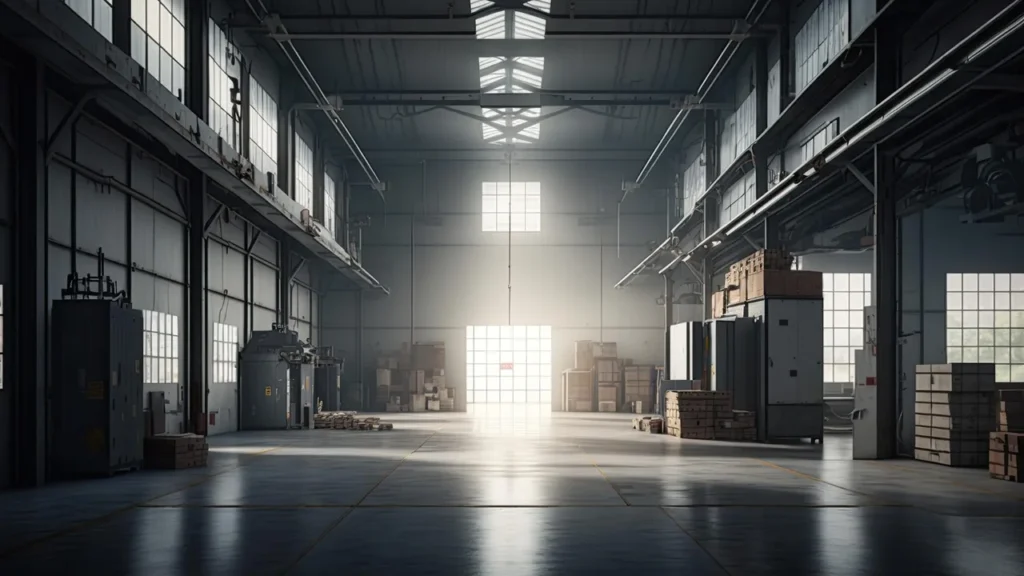

The evolution of the steel structure warehouse has redefined the logistics landscape, combining structural innovation with cutting-edge automation technologies. In today’s fast-paced industrial economy, efficiency, adaptability, and data-driven control are essential. Steel-based warehouses now form the backbone of smart logistics, enabling seamless integration of robotics, IoT systems, and artificial intelligence.
As global trade expands and e-commerce accelerates, companies seek warehousing facilities that can scale efficiently while maintaining operational precision. A steel structure warehouse not only offers strength and durability but also provides the flexibility needed to integrate automation, optimize space utilization, and enhance energy efficiency. This article explores how steel structures are transforming modern warehousing through automation, robotics, and digital innovation.
The Evolution of Modern Warehousing
Traditional warehouses were designed for manual operations, where efficiency depended largely on human labor and basic storage layouts. However, as supply chains became more complex, these old models proved insufficient. The transition from conventional storage to smart warehousing represents a fundamental shift driven by digitalization and advanced engineering.
The adoption of steel structure warehouses marks a turning point in this evolution. Unlike concrete buildings, steel facilities can be constructed faster, customized with modular components, and easily expanded to accommodate future automation systems. As a result, steel warehouses have become the preferred infrastructure for modern logistics companies aiming to combine flexibility with high performance.
Advantages of Using Steel Structures for Smart Warehousing
High Strength and Durability
Steel structures provide unmatched strength-to-weight ratios, making them ideal for high-load operations involving heavy equipment and automated systems. They support overhead cranes, multi-tier shelving, and robotic picking systems without compromising stability. The precision of fabricated steel also ensures compatibility with advanced automation components such as conveyor belts and robotic arms.
Flexibility for Automation Layouts
A steel structure warehouse offers exceptional design flexibility. Its column-free spans allow engineers to create open floor plans optimized for AGVs (Automated Guided Vehicles), drones, and smart racking systems. The modular design also allows companies to upgrade automation infrastructure — from AI-based sorting to autonomous material transport — without major structural changes.
Sustainability and Long-Term Cost Efficiency
Beyond operational efficiency, steel offers environmental and economic advantages. Most industrial steel is recyclable, reducing the carbon footprint of new construction. In addition, prefabricated steel components shorten project timelines by up to 40% compared to concrete, minimizing labor costs and downtime. Combined with energy-efficient insulation and solar-compatible roofing, these features make steel warehouses a cornerstone of sustainable logistics.
Integrating Robotics and Automation in Steel Warehouses
Automated Storage and Retrieval Systems (AS/RS)
AS/RS technology revolutionizes the way products are stored and retrieved. Within a steel structure warehouse, these automated systems leverage vertical storage space to maximize capacity while minimizing manual intervention. Robots move goods precisely through racks designed to handle high-density storage. This not only speeds up the retrieval process but also improves inventory accuracy by over 99%.
Robotics and Material Handling
Modern smart warehouses rely heavily on robotics for material handling. Robotic arms, autonomous forklifts, and palletizing systems streamline tasks that were once labor-intensive. These technologies integrate seamlessly with the modular frames of steel buildings, allowing heavy machinery to operate efficiently without structural interference.
- Robotic Palletizers: Stack and organize goods with consistent precision.
- Autonomous Forklifts: Navigate aisles using LIDAR and AI mapping.
- Conveyor Integration: Connects production lines directly to shipping zones.
This automation synergy minimizes downtime, improves throughput, and ensures 24/7 operations. Global logistics leaders like Amazon and Alibaba have already leveraged this model to achieve up to 30% faster order fulfillment.
IoT and Smart Logistics Management
IoT-enabled devices are now standard in every advanced steel structure warehouse. Sensors continuously monitor temperature, humidity, vibration, and movement, ensuring product quality and structural safety. Through cloud-connected systems, managers gain real-time visibility of operations — from inbound shipments to delivery scheduling — all within a unified Warehouse Management System (WMS).
| Smart Feature | Function | Operational Benefit |
|---|---|---|
| IoT Sensors | Track conditions in storage areas | Ensures environmental stability |
| AI Analytics | Processes logistics data | Predicts inventory needs |
| Automated Control Systems | Manage lighting, HVAC, and conveyor timing | Reduces energy consumption |
By merging robotics and smart logistics, a steel warehouse transforms into a dynamic, self-learning ecosystem that continuously adapts to operational demand.