
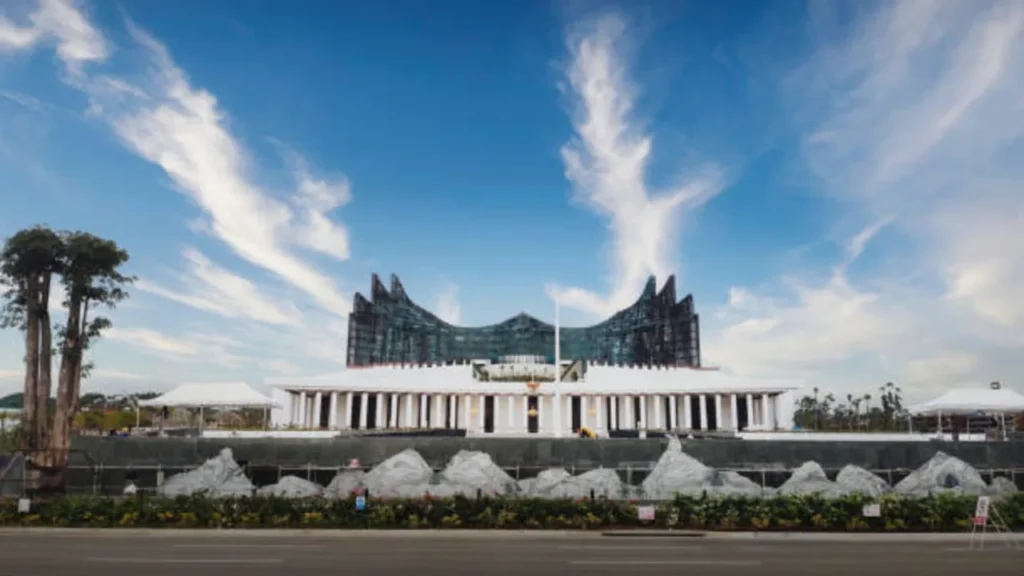

The IKN Nusantara development represents one of the most ambitious national projects in Indonesia’s history — a visionary effort to create a modern, sustainable capital city that reflects the nation’s growth, innovation, and diversity. Strategically located in East Kalimantan, the new capital, officially named Ibu Kota Nusantara (IKN), aims to balance physical infrastructure construction with human resource development, ensuring that progress is not just seen in buildings but also in people.
Indonesia’s Vision Behind the IKN Nusantara Development
The relocation of Indonesia’s capital from Jakarta to Nusantara is not merely a physical move; it’s a strategic transformation aimed at redistributing economic activity, promoting regional equality, and creating a future-ready city. The IKN Nusantara development focuses on three main pillars: sustainable infrastructure, digital governance, and inclusive human growth.
According to the Nusantara Capital Authority (OIKN), led by Basuki Hadimuljono, the former Minister of Public Works and Public Housing, IKN’s development is a long-term national mission. It symbolizes Indonesia’s readiness to embrace new models of governance and urban planning — where physical and human growth progress hand in hand.
Building the Physical Foundations of Nusantara
At the heart of the IKN construction phase lies an intricate network of infrastructure projects designed to make Nusantara livable, resilient, and connected. The city is being developed in multiple zones — including government, residential, commercial, and green areas — each tailored to foster productivity and sustainability.
Key projects include the construction of core government complexes for the executive, legislative, and judicial branches. Civil servant housing blocks, transport corridors, water systems, and smart energy networks are also part of the first phase of development, ensuring that Nusantara is functionally ready for its initial residents by the government’s target timeline.
The Sepaku Semoi Dam: Supporting Sustainability
Among the vital components of the IKN Nusantara development is the Sepaku Semoi Dam — a cornerstone project providing raw water to both Nusantara and Balikpapan. The dam guarantees sustainable water management for households and industrial use, strengthening the region’s environmental resilience.
A water treatment facility complements this infrastructure, ensuring clean and safe water distribution while maintaining ecological balance. This highlights Indonesia’s dedication to environmental stewardship throughout the development process.
Urban Design Focused on Inclusivity
Unlike traditional city planning models, Nusantara’s design integrates green corridors, pedestrian networks, and low-carbon transportation. The master plan promotes walkability, renewable energy use, and digital connectivity — all central to Indonesia’s vision of a sustainable smart capital.
Public facilities, including the State Mosque and Saint Francis Xavier Basilica, symbolize cultural inclusivity and interfaith harmony. These landmarks reflect the social fabric Indonesia wishes to promote — unity in diversity, mirrored in architecture and urban life.
Human Development: Empowering People for a New Era
Beyond concrete and steel, the IKN Nusantara development invests heavily in people. The Nusantara Capital Authority has emphasized that the success of IKN depends not only on buildings but also on human capacity and community empowerment.
Collaborating with leading academic institutions such as the Bandung Institute of Technology (ITB), the OIKN launched digital literacy and creative economy programs to prepare local communities for the modern workforce. High school and vocational students receive training in digital content creation, entrepreneurship, and sustainable business practices, ensuring they can participate in the evolving economy of the new capital.
Empowering Local Communities and SMEs
In addition to educational programs, over 900 community development activities have been organized across East Kalimantan. These include workshops for women entrepreneurs, people with disabilities, and small-to-medium enterprise (SME) owners. The goal is to build self-reliant communities capable of thriving alongside the physical transformation of the region.
Micro-enterprise development plays a crucial role in the IKN construction ecosystem. By connecting local suppliers and service providers with the city’s expanding project needs, the government ensures that economic benefits are distributed fairly and stimulate regional growth.
Strengthening Governance and Legal Awareness
Another innovative aspect of the human development strategy is civic education. In partnership with the Jimly School of Law and Government, founded by Indonesia’s first Constitutional Court Chief Justice, the OIKN promotes governance training and legal awareness. This initiative aims to prepare citizens and officials for the distinct administrative framework of Nusantara as a new capital region.
Integrating Technology and Sustainability
Technology is embedded at the core of IKN Nusantara development. From digital governance systems to green building certification standards, technology drives efficiency, transparency, and environmental responsibility. Every major facility is designed under the “smart city” principle — equipped with sensors, integrated data centers, and eco-efficient materials.
Renewable energy sources, including solar and hydropower, are planned to meet a significant portion of the city’s energy demand. Smart waste management systems and green transportation corridors further strengthen Nusantara’s status as a global model for sustainable urban development.
Why Balancing Physical and Human Growth Matters
The success of any capital city depends on how well its infrastructure serves its people — not the other way around. The IKN Nusantara development reflects this understanding. By aligning human empowerment with physical progress, Indonesia ensures that its new capital evolves as a living, learning ecosystem rather than a static administrative hub.
This approach offers four major benefits:
- Sustainable Growth: A skilled and educated population ensures that development continues responsibly beyond the initial construction phase.
- Economic Inclusivity: By training local workers and entrepreneurs, the IKN project spreads prosperity across Kalimantan and the entire nation.
- Social Resilience: Strong community foundations prevent inequality and displacement, ensuring long-term stability.
- Innovation Culture: A digitally literate society fosters entrepreneurship, creative industries, and technological adaptation.
Progress Achieved and Future Milestones
As of early 2026, major progress indicators of the IKN construction include completion of critical infrastructure such as the dam, road networks, residential complexes, and water systems. Civil servant housing projects are nearing readiness, while government core buildings are in their finishing phases.
Parallel to physical progress, human resource programs continue expanding. Thousands of participants have benefited from digital and vocational training, and several academic collaborations are producing local talent tailored to IKN’s needs. The OIKN has also initiated “IKN Smart Academy,” a platform combining e-learning and on-site mentorship for sustainable city management.
Public Participation and Private Investment
The IKN Nusantara development is also an open call for collaboration. The government has encouraged domestic and international investors to participate in various sectors — from construction and energy to technology and education. The private sector’s involvement helps accelerate progress while sharing expertise and innovation.
Public participation is equally important. Local residents are engaged through community planning forums, ensuring that development decisions align with the social and cultural fabric of East Kalimantan. This participatory model enhances transparency and builds long-term trust between the government and citizens.
Challenges and Commitments
Like any large-scale urban project, the IKN construction faces logistical, financial, and environmental challenges. However, Indonesia’s government remains firm in its commitment to ensuring that Nusantara becomes a living example of sustainability and inclusivity. Environmental protection laws, carbon reduction targets, and green certification systems have been embedded into the city’s regulatory framework.
The presence of an integrated master plan allows the OIKN to synchronize infrastructure development, policy implementation, and social empowerment programs, ensuring no aspect of growth is left behind.
Looking Ahead: A Model for Future Cities
The IKN Nusantara development stands as a testament to Indonesia’s ability to innovate while preserving its social harmony. As physical infrastructure continues to rise and human programs expand, Nusantara is expected to become a benchmark for smart, sustainable capitals worldwide.
By prioritizing both people and progress, Indonesia demonstrates that the path to modernization is not only about technology and construction — it’s about empowering every citizen to contribute to a collective vision of a brighter, greener future.
Learn more about steel structure construction technologies that support sustainable urban growth like Nusantara.