
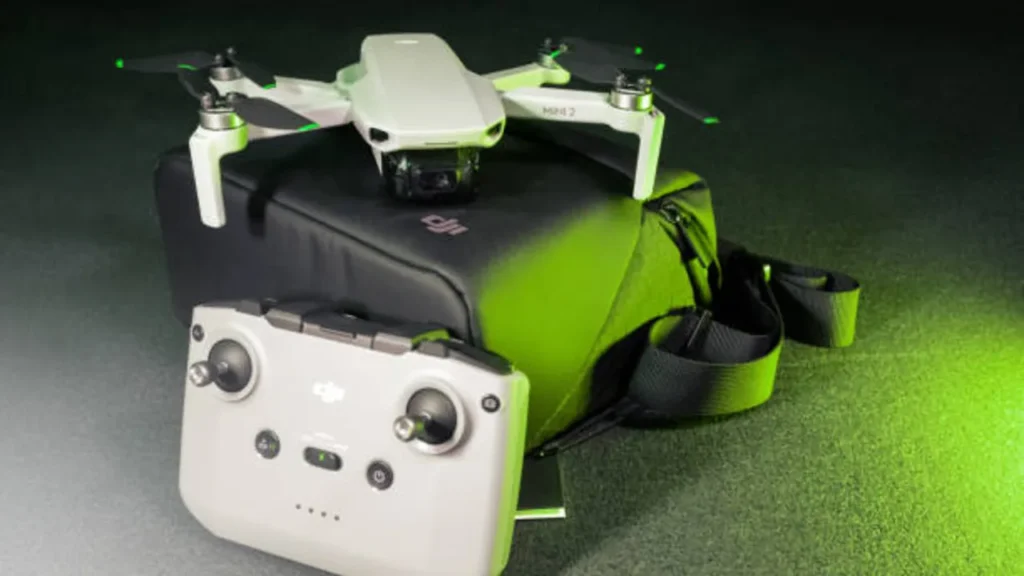

The skies over the United States are about to change. After years of widespread use of foreign-made drones by hobbyists, professionals, and public agencies, the Federal Communications Commission (FCC) has announced a sweeping new policy banning the import and sale of all new drone models made by foreign manufacturers. The decision represents one of the most significant regulatory moves in the history of the drone industry, directly impacting the global market leader, DJI.
New FCC Rule Redefines the Drone Market
The new FCC regulation adds several foreign drone manufacturers to its official “Covered List,” a register of companies deemed to present national security risks. Under this rule, no new drone models or related communication equipment from these entities can be imported or sold in the United States.
While the policy allows previously approved models to remain operational and available for sale, it effectively shuts the door on future product generations from leading Chinese brands. This decision is aimed at preventing foreign-controlled technologies from collecting sensitive data or gaining access to U.S. airspace systems.
DJI: The Global Leader Under Pressure
DJI, based in Shenzhen, China, has been the dominant force in the drone industry for more than a decade. Its products are used by photographers, engineers, farmers, construction companies, and public safety agencies. With approximately 70% of the global market share, DJI’s influence has been unmatched.
From aerial photography to precision agriculture and infrastructure monitoring, DJI’s drones have become essential tools for countless industries. However, the new FCC ban on foreign drones is expected to disrupt this ecosystem, forcing American operators to reconsider their equipment sources and business models.
Strategic Motivation Behind the Ban
The move aligns with Washington’s broader effort to boost domestic manufacturing and safeguard digital infrastructure. The U.S. government has emphasized the need to ensure that technologies flying in its skies are free from foreign control or exploitation. Officials have stated that the new policy is designed to promote “American drone dominance” while maintaining public safety and data protection.
Existing DJI drones will remain legal to operate, and previously authorized devices can still be sold until inventories run out. But no new DJI product lines will be approved going forward, a blow to both the company and thousands of users who depend on its technology for work and research.
Years of Scrutiny Lead to This Point
Concerns over Chinese-made drones are not new. Since the late 2010s, American defense and security agencies have raised alarms about potential cybersecurity risks associated with data transmission to overseas servers. Over time, these warnings led to restrictions and procurement bans in various government departments.
In recent years, DJI faced a series of challenges, including export restrictions, investment bans, and accusations of collaborating with foreign military organizations—claims the company has consistently denied. Despite its efforts to engage with regulators and provide transparency, the new FCC decision marks a definitive escalation.
DJI’s Reaction: Disappointment and Defense
In response to the ban, DJI expressed disappointment and reaffirmed its commitment to the U.S. market. The company emphasized that it adheres to international safety and privacy standards and that independent testing has repeatedly confirmed the integrity of its systems. Representatives argue that the ban reflects economic protectionism rather than a data security concern.
DJI’s leadership stated that they remain open to cooperation and transparency, calling for dialogue rather than restrictions. The company warned that the ban could harm consumers and small businesses that rely on affordable, high-quality drone technology for professional use.
Broader Implications for the Drone Industry
The US ban on foreign drones could reshape the global drone landscape in several ways. Firstly, it opens opportunities for American startups and manufacturers to fill the gap left by DJI’s absence. However, domestic companies face significant challenges, including high production costs, limited component availability, and smaller economies of scale.
Many experts warn that replacing DJI’s technological capabilities will take time. The company has spent years refining its flight systems, sensors, and imaging technology to achieve reliability and performance unmatched by competitors. For now, U.S. drone operators may face higher costs and slower innovation cycles.
National Security vs. Market Competition
Supporters of the FCC’s move believe it is a necessary safeguard. They argue that drones with foreign data links could pose risks to national infrastructure, especially if used in sensitive sectors such as law enforcement, critical utilities, or border monitoring. The ability of drones to collect high-resolution imagery and transmit data over networks has made them both powerful tools and potential threats.
Critics, on the other hand, view the ban as a step toward economic isolationism. They contend that without concrete evidence of wrongdoing, such restrictions undermine fair trade and harm the competitiveness of U.S. industries that depend on advanced aerial technology. Some analysts suggest the decision is as much political as it is security-driven, reflecting broader tensions between the United States and China over technological dominance.
Historical Background: A Pattern of Increasing Restrictions
This is not the first time Chinese companies have faced barriers in the U.S. market. Over the past decade, several technology giants have been added to the FCC’s Covered List, including major telecom firms. Each case has been justified under the banner of national security, data protection, or human rights concerns.
For DJI, this latest action adds to a long list of restrictions. The company was previously placed on trade and investment blacklists by other federal agencies, which limited access to American suppliers and financial institutions. Despite these setbacks, DJI maintained a significant presence in the U.S. through existing sales channels and service partners.
Domestic Alternatives and Innovation Opportunities
With the new ban in place, attention is turning toward American drone manufacturers. The government is expected to increase support for domestic research and development programs focused on autonomous flight systems, artificial intelligence, and secure communication networks.
Several emerging U.S. startups are already developing drones for industrial and defense applications. They aim to build platforms that meet strict cybersecurity requirements while remaining cost-competitive. However, analysts note that achieving the same performance and affordability as DJI may take years.
Industry observers expect the ban to accelerate partnerships between the private sector, defense agencies, and universities, potentially leading to new innovation hubs dedicated to unmanned aerial technology. Federal grants and incentive programs could play a key role in nurturing this ecosystem.
Impact on Consumers and Professionals
For everyday users and professional drone operators, the short-term impact of the US ban on foreign drones will likely be limited to pricing and availability. Retailers can continue selling existing stock, and previously purchased drones remain fully operational. However, over time, users may face reduced access to parts, software updates, and replacement units.
Creative industries—such as filmmaking, real estate, and aerial mapping—may also feel the effect. DJI’s products are known for their advanced stabilization, high-resolution imaging, and ease of use. Losing access to new models could push professionals to seek alternative solutions, including refurbished units or domestic brands with comparable features.
Political and Economic Dimensions
The drone ban fits into a larger geopolitical context of technology decoupling between the United States and China. Both nations are increasingly focused on building self-reliant tech ecosystems and reducing cross-border dependencies. This dynamic has already influenced sectors such as semiconductors, telecommunications, and renewable energy—and now extends to the drone industry.
Observers note that while the ban may strengthen domestic industries in the long term, it could also create friction in international trade relations. The move signals to global partners that national security priorities can override open market access, a trend that could reshape future global technology regulations.
Looking Ahead: A Divided Sky
The U.S. drone industry is entering a new era. For policymakers, the focus is on protecting national security and data integrity. For businesses, the challenge lies in adapting to a rapidly changing regulatory landscape. For consumers, the choice of drones will soon narrow as major foreign brands exit the market.
DJI’s global leadership is unlikely to disappear overnight, but its U.S. footprint will shrink as domestic players attempt to fill the void. The outcome of this policy shift will depend on how effectively American manufacturers can innovate and compete at scale.
Conclusion: A Turning Point for Aerial Technology
The US ban on foreign drones marks a defining moment for the future of unmanned aerial systems. It highlights the growing intersection of technology, national security, and global trade. While the decision may strengthen domestic industries, it also raises important questions about innovation, competition, and international collaboration.
As America charts its course toward self-sufficiency in drone technology, the world will be watching closely. The race for aerial dominance has entered a new phase—one shaped not only by innovation but by policy, strategy, and geopolitics.