
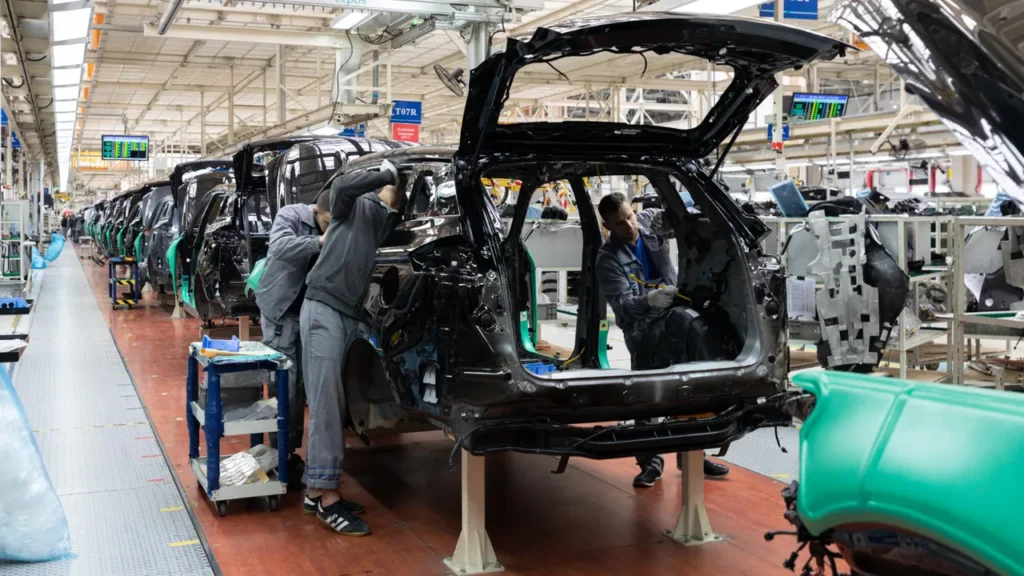

The global automotive industry is at a turning point. In a landmark declaration made during an international climate summit, six leading car manufacturers officially committed to phase out fossil fuel vehicles by 2040. This milestone signals the beginning of a new era where electric mobility and clean energy will gradually replace traditional engines powered by fossil fuel. The transition is not only a corporate commitment—it’s a critical step in the worldwide effort to fight climate change and reduce greenhouse gas emissions.
Global Commitment Toward Zero-Emission Transport
The announcement unites six major automakers—Ford, General Motors, Mercedes-Benz, Volvo Cars, BYD Auto, and Jaguar Land Rover—under a shared vision for sustainable mobility. Each of these brands has pledged to stop producing new cars and vans powered by gasoline or diesel by 2040. In leading markets, they aim to complete this transformation by 2035, marking a complete end to vehicles dependent on fossil fuel.
The decision was unveiled during a high-profile climate summit, sending a powerful message that the world’s automotive giants are prepared to align with global carbon-reduction goals. It demonstrates how private industry can act in coordination with governments and civil society to accelerate the transition toward a cleaner, greener transportation sector.
Why Phasing Out Fossil Fuel Vehicles Matters
The transportation sector accounts for nearly a quarter of global carbon emissions. Most of that comes from cars, trucks, and buses burning fossil fuel—mainly gasoline and diesel. Every liter of fuel burned adds carbon dioxide, nitrogen oxides, and particulate matter to the atmosphere, intensifying global warming and harming public health. To meet the Paris Agreement’s target of limiting temperature rise to 1.5°C, the world must rapidly decarbonize road transport.
By committing to phase out fossil fuel vehicles by 2040, these automakers are addressing one of the most critical challenges in modern industry: how to balance economic growth with environmental responsibility. Ending the production of internal-combustion vehicles will cut millions of tons of CO₂ emissions each year, contributing significantly to global climate goals.
Companies Leading the Charge
Each of the six signatory automakers has already begun shifting its strategy toward electrification. Volvo Cars, for instance, plans to sell only fully electric vehicles by 2030. General Motors has pledged to make all of its light-duty vehicles zero-emission by 2035. Ford has announced massive investments in battery production and EV manufacturing facilities, while Mercedes-Benz is developing its “Electric Only” roadmap to eliminate dependence on fossil fuel. Meanwhile, BYD—China’s electric pioneer—and Jaguar Land Rover are intensifying research on advanced batteries, hybrid systems, and sustainable production.
Together, these brands represent a cross-continental alliance—from Europe and America to Asia—showing that the movement to end fossil fuel dependence is no longer confined to a few markets. It is becoming a global industrial transformation.
Governments, Cities, and Fleets Joining the Movement
The pledge has also inspired governments, local authorities, and corporate fleet operators to set their own targets. Several countries have already announced plans to restrict or ban new fossil fuel vehicle sales between 2030 and 2040. Cities are introducing low-emission zones, electrifying public transportation, and incentivizing citizens to choose cleaner alternatives.
Corporate fleet owners, logistics companies, and ride-hailing platforms are also shifting to electric and hydrogen vehicles. This collective action from both public and private sectors is critical to creating a network effect that makes zero-emission vehicles more accessible and affordable.
Not Everyone Joined the Pledge
While the commitment represents a bold step, several major carmakers and key markets remain hesitant. Industry giants such as Toyota and Volkswagen, as well as countries like the United States, China, and Germany, did not sign the declaration. Their absence reflects the diverse economic realities and technological challenges facing the automotive industry.
Some automakers continue to invest heavily in hybrid technology or alternative fuels, arguing that a complete ban on fossil fuel vehicles may not yet be practical in regions lacking charging infrastructure or stable electricity grids. Others express concern about supply chain constraints, especially in sourcing raw materials for batteries, or the environmental impact of large-scale battery production.
Challenges on the Road to 2040
Completely eliminating fossil fuel from road transport requires overcoming multiple barriers:
- Infrastructure: Building a dense, reliable network of charging stations remains a major challenge, especially in rural and developing areas.
- Battery Technology: Current batteries rely heavily on lithium, cobalt, and nickel—materials with supply and environmental concerns.
- Affordability: Electric vehicles must reach price parity with fossil fuel cars to achieve mass adoption.
- Energy Supply: Without clean energy grids, EVs may simply shift emissions upstream to fossil fuel-based power plants.
- Consumer Behavior: Drivers accustomed to long ranges and quick refueling need assurance of convenience and performance.
These challenges illustrate that phasing out fossil fuel vehicles is not just about changing car technology—it’s about transforming the entire ecosystem that supports mobility.
Economic Implications for the Auto Industry
The transition to zero-emission vehicles could reshape global supply chains, labor markets, and national economies. Traditional car manufacturing is closely tied to fossil fuel industries—from petroleum extraction to parts suppliers. As automakers switch to electric drivetrains, demand for certain components (like engines, exhaust systems, and transmissions) will decline sharply, while new sectors—battery production, recycling, renewable energy—will expand rapidly.
Experts estimate that billions of dollars in investment will flow into new facilities for electric vehicle production, battery recycling, and charging infrastructure. While some jobs in fossil fuel-related industries may disappear, new opportunities will arise in clean energy and advanced manufacturing. Governments that act early to retrain workers and support innovation will likely gain a competitive advantage in the global green economy.
Environmental and Health Benefits
The environmental benefits of phasing out fossil fuel vehicles are extensive. Reduced tailpipe emissions mean cleaner air in urban areas, leading to fewer respiratory illnesses and lower healthcare costs. Decreased oil consumption reduces the risk of spills, leaks, and pollution in oceans and rivers. The shift to electric mobility also minimizes noise pollution, making cities quieter and more livable.
On a global scale, cutting reliance on fossil fuel vehicles will significantly reduce greenhouse gas emissions, helping nations meet their commitments under the Paris Agreement. If combined with renewable energy generation, electric vehicles could achieve near-zero lifetime emissions, breaking the link between mobility and climate damage.
Innovation: The Heart of the Transition
The pledge to phase out fossil fuel vehicles by 2040 is accelerating innovation across multiple fields. Battery research is advancing rapidly, promising higher energy density, faster charging, and longer life cycles. Hydrogen fuel cells are gaining traction for heavy-duty transport and long-distance applications. Digital technologies, such as smart charging and vehicle-to-grid systems, are integrating cars with clean power networks.
Automakers are also investing in circular-economy models—designing vehicles for easier recycling and reusing raw materials. Software is becoming the new frontier of automotive competition, as companies race to develop advanced driver-assistance systems and energy-management platforms that maximize efficiency and safety.
Developing Markets and the Global South
For developing countries, the phase-out of fossil fuel vehicles presents both challenges and opportunities. Many emerging economies still rely on second-hand cars exported from developed nations—often older, high-emission models. Without coordinated international policy, there’s a risk that fossil fuel vehicles banned in richer countries could flood developing markets.
However, there is also great potential. With growing urbanization and rising energy demand, developing regions can leapfrog directly to cleaner technologies. By investing early in renewable power and electric mobility, these markets can reduce dependence on imported oil and build local green industries.
The Role of Policy and Regulation
Government policy will determine how fast the world can phase out fossil fuel vehicles by 2040. Tax incentives, subsidies for EV buyers, strict emissions standards, and infrastructure investment are essential tools. Nations that enforce ambitious regulations—like banning new fossil fuel car sales by specific dates—are already seeing results. The UK, Norway, and several EU members are leading by example.
At the same time, cooperation between countries is crucial. Global standards for battery recycling, safety, and charging interfaces will reduce costs and accelerate adoption. The energy transition requires an alignment of industrial, environmental, and economic policies across borders.
Public Perception and Consumer Transition
Consumer attitudes are shifting quickly. Growing awareness of climate change and environmental degradation is driving people to seek alternatives to fossil fuel vehicles. Electric cars are no longer viewed as experimental or luxury products—they’re becoming mainstream. With improved driving range, lower maintenance costs, and expanding charging networks, EVs are now practical for most drivers.
Marketing, education, and incentives play a crucial role in reinforcing this cultural change. Automakers and governments alike are investing in campaigns to highlight the benefits of going electric—not only for the planet but also for long-term savings and performance.
Can the World Really Meet the 2040 Target?
While 2040 may seem distant, it’s only 15 years away for most automakers’ planning cycles. Achieving a complete end to fossil fuel vehicle production by that date will require consistent political will, financial investment, and international cooperation. Critics warn that without concrete action plans, the pledge could remain symbolic. Yet, every major industrial transition in history—from steam to electricity, analog to digital—began with such commitments.
The key to success lies in accountability and transparency. Automakers must report progress, governments must enforce targets, and consumers must continue to demand cleaner solutions. If all three forces align, the phase-out of fossil fuel vehicles could arrive even earlier than 2040.
Conclusion: The End of the Fossil Fuel Era
The decision by six global automakers to phase out fossil fuel vehicles by 2040 represents a defining moment in the history of transportation. It marks the beginning of the end for gasoline and diesel cars and the dawn of a cleaner, smarter, and more sustainable mobility system. The transition won’t be easy—technical, economic, and cultural barriers remain—but the direction is now irreversible.
As the world races to decarbonize, the automotive industry’s commitment to eliminating fossil fuel vehicles demonstrates that change is possible when innovation meets responsibility. The 2040 target is not merely a deadline—it’s a vision of progress, collaboration, and hope for a planet where transport no longer depends on pollution. The road ahead is long, but it’s finally leading toward a future beyond fossil fuel.