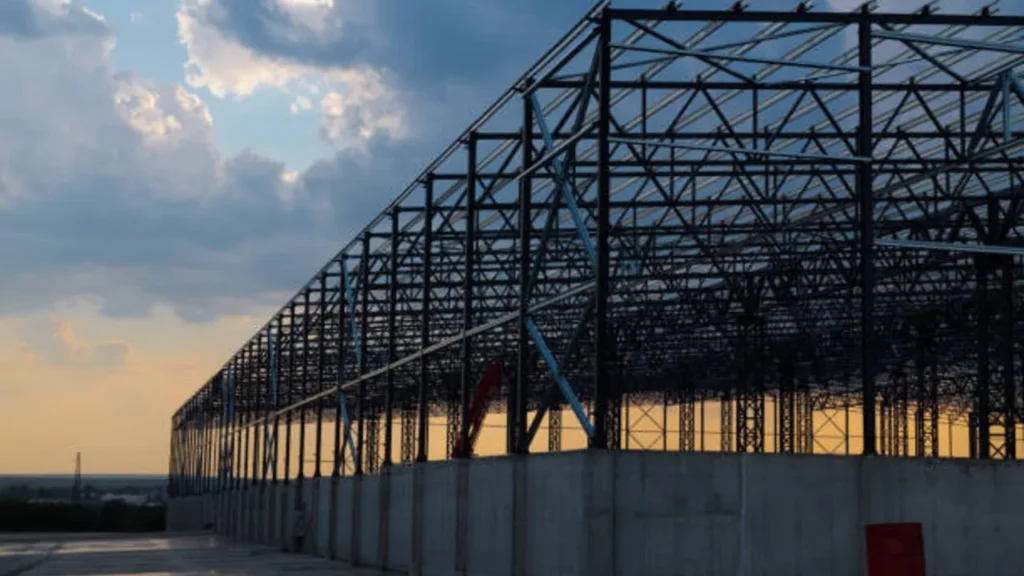

Industrial parks around the world are entering a new era of innovation, efficiency, and sustainability. As manufacturing demands increase and global supply chains evolve, the steel structure factory has become the backbone of this transformation. Designed for speed, scalability, and longevity, steel-based industrial buildings are now redefining how economic zones and large-scale plants are developed, operated, and expanded. The future of industrial development depends not only on advanced engineering but also on flexible, eco-friendly construction methods — and steel structure systems are leading the way.
Evolution of Industrial Parks and Economic Zones
From Traditional Concrete to the Steel Era
Over the past two decades, industrial zones have transformed from clusters of traditional concrete buildings into dynamic ecosystems powered by steel structure factories. These factories offer faster assembly, lighter foundations, and greater durability, enabling governments and investors to accelerate infrastructure growth. In Asia, Africa, and the Middle East, industrial parks built with prefabricated steel have shown remarkable efficiency compared to conventional designs.
Traditional concrete buildings require months of on-site labor, large manpower, and costly maintenance. In contrast, steel solutions rely on precision manufacturing, modular fabrication, and quick installation. This not only reduces construction time but also minimizes environmental impact and energy consumption — two critical goals in modern economic zones.
Integration of Large-Scale Plants and Logistics
Modern industrial parks are no longer simple manufacturing areas — they have evolved into integrated hubs where large-scale plants, logistics warehouses, and business centers coexist. The steel structure factory model supports this integration by allowing flexible layouts, clear-span designs, and heavy load-bearing capacity. These features are crucial for high-performance manufacturing facilities, whether in automotive, energy, or technology sectors.
By adopting modular steel systems, developers can design facilities that accommodate conveyor systems, cranes, and automation lines. Additionally, steel structure warehouses complement these factories, ensuring smooth material handling and optimized logistics — the lifeline of every modern industrial park.
Why Steel Structure Factories Are the Core of Modern Industrial Parks
Speed and Scalability
Time-to-market has become one of the most decisive factors in industrial investment. A steel structure factory can be erected in 40–60% less time than a concrete alternative. Prefabricated steel components are produced in controlled environments, transported to site, and assembled efficiently. For investors in economic zones, this rapid timeline translates directly into earlier production starts, faster ROI, and reduced capital risk.
Equally important, steel buildings are inherently scalable. Industrial parks can expand their facilities by adding new bays or extending frames without disturbing ongoing operations. This flexibility is vital for large-scale plants that need to respond quickly to global market shifts.
Strength, Durability, and Low Maintenance
Steel’s physical properties make it one of the strongest and most reliable construction materials. It offers high tensile strength, resistance to corrosion (especially with galvanization or protective coatings), and remarkable load-bearing capacity. These attributes ensure that a steel structure factory can withstand extreme weather, seismic events, and heavy machinery loads for decades.
Unlike concrete structures that may crack or require constant maintenance, steel facilities demand minimal upkeep. Their modular design also allows damaged parts to be replaced without major reconstruction — an advantage that enhances long-term cost efficiency. The combination of strength and durability makes steel a preferred choice for large-scale industrial developments.
| Parameter | Steel Structure Factory | Concrete Factory |
|---|---|---|
| Construction Time | 4–6 months | 10–14 months |
| Flexibility | High (modular expansion) | Low (static layout) |
| Maintenance Cost | Low | Medium to High |
| Eco Impact | Recyclable materials | High waste generation |
| Expansion Ability | Easy to extend | Complex modification |
Sustainability and Green Standards
Environmental sustainability is a key metric for every modern industrial development. Prefabricated steel systems minimize on-site waste and promote circular construction. Since steel is 100% recyclable, the material lifecycle can be extended indefinitely. Many governments now encourage developers to adopt steel structure factories to achieve green building certifications and align with national carbon reduction goals.
Compared to traditional methods, steel-based construction reduces dust, noise, and construction debris — a significant improvement for eco-conscious economic zones. This shift not only benefits the environment but also helps companies strengthen their ESG performance and attract responsible investors.
Case Studies — Steel Structure Success in Economic Zones
China’s National Industrial Parks
China remains the largest adopter of prefabricated steel in industrial infrastructure. In zones like Suzhou Industrial Park, the application of modular steel structure factories has streamlined development cycles while ensuring energy efficiency and design consistency. XTD Steel, a leading manufacturer, supplies complete steel systems for industrial parks and export zones, offering turnkey solutions that meet both local and international standards.
These projects demonstrate how advanced steel engineering can reduce land usage, optimize energy consumption, and boost productivity across multiple large-scale plants.
Middle East Economic Cities
The Middle East has embraced steel structures as part of its industrial diversification. In Saudi Arabia’s NEOM project and Dubai Industrial Zone, steel structure factories are being used for manufacturing, logistics, and research facilities. The quick installation and durability of steel allow developers to maintain high output while meeting strict environmental codes.
Similarly, these smart economic cities rely heavily on steel structure warehouses for efficient logistics and storage — key enablers in creating sustainable industrial ecosystems.
ASEAN & Africa Emerging Zones
Emerging economies across Southeast Asia and Africa are also shifting toward steel-based construction. In Vietnam, Indonesia, and Kenya, steel structure factories are used to build affordable and durable industrial spaces that attract foreign investment. These countries benefit from lower construction costs, local job creation, and improved regional competitiveness.
Such examples prove that the future of economic zones will be shaped by modular steel systems capable of meeting global industrial demands with minimal environmental footprint.
Designing Future-Ready Industrial Parks
Flexibility for Hybrid Use
The future of industrial parks will rely on multifunctional designs that can adapt to different manufacturing and logistics needs. A steel structure factory provides unmatched flexibility for hybrid-use spaces — where production lines, storage facilities, and research labs can coexist under one structural framework. The ability to integrate production and warehousing within the same site saves both land and cost, which is critical for developers operating in competitive economic zones.
Moreover, combining a steel structure warehouse and a production plant allows companies to streamline their supply chain operations. This unified configuration supports just-in-time manufacturing and enhances coordination between departments, a strategy proven effective in high-performance industrial regions such as East Asia and the Middle East.
Smart Infrastructure Integration
As digitalization reshapes industrial operations, steel structure factories play an essential role in enabling smart technologies. The lightweight yet robust design supports the installation of automation systems, robotic cranes, and smart monitoring devices. With integrated BIM (Building Information Modeling) and IoT systems, industrial parks can monitor performance, energy usage, and structural health in real time.
These smart integrations not only reduce operational costs but also extend building lifespan. For large developers managing several large-scale plants, centralized monitoring across multiple facilities enhances both safety and efficiency. In short, steel structures form the physical foundation of tomorrow’s smart industrial ecosystems.
Policy and Investment Outlook
Global economic shifts are pushing governments to redesign industrial development policies. Many economic zones now provide tax incentives, infrastructure grants, and fast-track approvals for projects utilizing green and modular technologies. The steel structure factory model perfectly aligns with these incentives, offering an eco-friendly and cost-effective construction path for investors.
As the global race for industrial competitiveness intensifies, countries that prioritize steel-based construction will gain a significant advantage. Not only will they attract multinational manufacturers, but they’ll also promote sustainable growth through reduced construction waste and increased reusability of materials.
The Role of Steel Structure Engineering Companies
From Design to Turnkey Delivery
The success of modern industrial parks depends heavily on collaboration between developers and specialized engineering firms. A professional steel structure factory manufacturer handles the entire EPC (Engineering, Procurement, and Construction) cycle — from conceptual design and structural modeling to fabrication and on-site assembly. This integrated approach minimizes coordination errors and accelerates project delivery timelines.
Leading firms like XTD Steel Structure deliver complete turnkey steel systems that meet international safety standards and are adaptable to various climates. Whether it’s a heavy industrial facility or a high-tech innovation park, such companies ensure precision in every bolt, beam, and panel.
Quality Control and International Standards
Modern steel construction adheres to stringent global standards, including EN 1090, AISC, and GB/T certifications. Compliance with these frameworks ensures that each steel structure factory is safe, reliable, and durable enough for decades of operation. Quality control at every fabrication stage — from welding to coating — guarantees superior performance, even in harsh environmental conditions.
Industrial park developers can rest assured that using certified steel systems minimizes risk and aligns with investor expectations. It also streamlines international project collaborations since standardized components simplify logistics and approvals.
Global Supply Chain Efficiency
Another advantage of steel structure systems is their logistical efficiency. Prefabricated components are lightweight, modular, and easy to ship across borders. This makes it possible to build large-scale plants in regions with limited manufacturing infrastructure, enabling a true global supply chain network.
Companies that adopt this model benefit from shorter project timelines and improved cost control. For multinational developers operating multiple economic zones, a consistent supply chain ensures predictable quality and performance — crucial factors in maintaining competitiveness.
The Road Ahead — Building Sustainable Industrial Ecosystems
Energy Efficiency and Renewable Integration
Industrial parks of the future are expected to integrate renewable energy solutions directly into their building design. A steel structure factory offers an ideal foundation for solar panel installations, natural ventilation systems, and rainwater collection units. With lightweight yet strong roofing systems, developers can easily integrate photovoltaic panels without compromising structural integrity.
By aligning with global sustainability goals, these energy-efficient buildings contribute to the decarbonization of the industrial sector. Combined with smart monitoring systems, steel-based facilities can achieve substantial reductions in operational energy costs and CO₂ emissions.
Local Economic Impact
Every industrial park project triggers a ripple effect across its surrounding communities. The establishment of large-scale plants creates jobs, attracts investment, and stimulates local infrastructure development. Steel construction amplifies this impact by relying on local fabrication and assembly, fostering skill development and regional economic growth.
Furthermore, governments that invest in steel structure factories within strategic economic zones often experience faster industrialization and higher foreign direct investment (FDI) inflows. This symbiotic growth ensures that both public and private sectors benefit from long-term industrial expansion.
The Long-Term Value of Steel Structure Factories
The value of a steel structure factory extends far beyond construction. It represents a long-term investment in efficiency, flexibility, and sustainability. Compared with concrete buildings that depreciate faster and demand frequent maintenance, steel structures retain higher asset value and allow for adaptive reuse. This adaptability makes them the preferred choice for investors focused on ROI and lifecycle performance.
As economic zones mature, developers that rely on steel systems gain a structural advantage — both literally and economically. They can pivot production layouts, expand operations, or upgrade facilities without costly demolitions. Such versatility positions steel as the ultimate material for future-ready industrial landscapes.
Conclusion
The evolution of industrial parks reflects a broader shift in global construction philosophy — from rigid, slow, and resource-heavy methods to flexible, fast, and sustainable ones. The steel structure factory stands at the heart of this transformation, offering unmatched benefits in cost-efficiency, scalability, and environmental responsibility.
From Asia’s manufacturing hubs to Africa’s emerging economic zones, steel-based construction continues to shape the blueprint for modern industrial development. With precision engineering, international standards, and eco-friendly performance, steel structure systems are not merely buildings — they are the foundation of the next industrial revolution. As industries evolve, one truth remains clear: the future of industrial parks is built on steel.
Frequently Asked Questions (FAQ)
1. What makes a steel structure factory better than concrete buildings?
Steel factories are faster to build, more durable, and easier to expand. They also produce less waste and support sustainable construction practices, making them ideal for modern industrial applications.
2. Are steel structure factories suitable for large-scale plants?
Yes. Their high load-bearing capacity, modular layout, and long-span design make them perfect for large-scale industrial operations such as energy, automotive, and logistics facilities.
3. How do steel structure factories benefit economic zones?
They attract investors by reducing construction time, improving efficiency, and aligning with green policy requirements. As a result, steel factories help governments achieve faster industrial growth and stronger regional economies.