
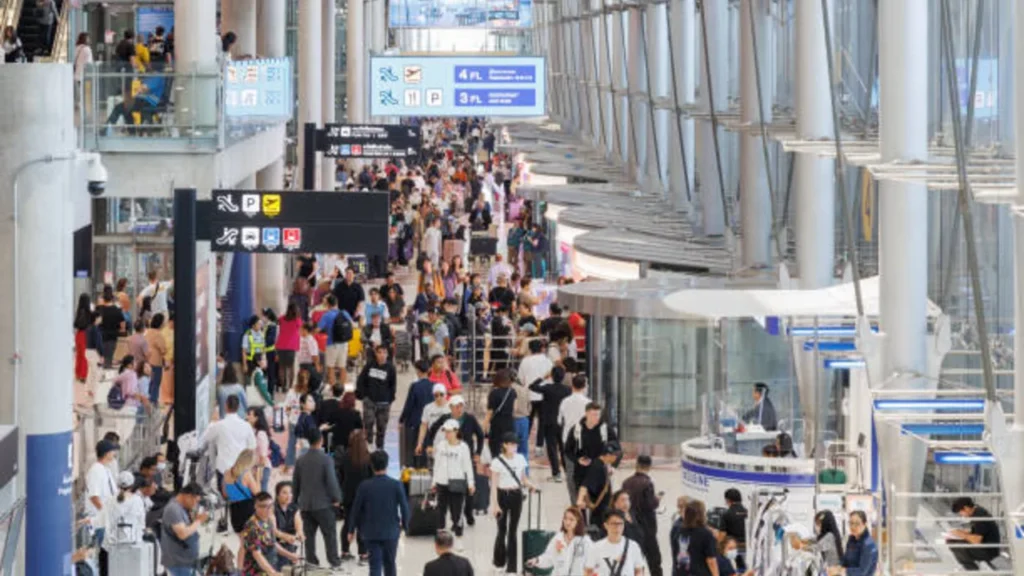

The landscape of global aviation is undergoing a massive transformation. As international route networks expand, corporate travel steadies, and visa policy relaxations unlock new tourism corridors across Asia and Europe, the world’s largest transit hubs are processing unprecedented crowds.
But what exactly qualifies a location as a truly busy airport? While aviation geeks might argue over runway capacities or total cargo tonnage, the definitive metric for the general public remains annual passenger volume—the sheer number of human beings passing through a terminal’s gates. In the latest global rankings analyzed by Visual Capitalist and the Airports Council International (ACI), one trend stands out above all else: the United States continues to anchor the global aviation market, standing as the only nation on earth to claim four distinct hubs within the top ten.
The Undisputed King of Passenger Traffic
Hartsfield-Jackson Atlanta International Airport (U.S.)
When it comes to handling mass humanity efficiently, no other busy airport on the planet compares to Hartsfield-Jackson Atlanta International Airport. Serving as the primary mega-hub for Delta Air Lines and a critical entry gateway to North America, Atlanta recently welcomed a staggering 106.3 million passengers through its concourses.
What makes Atlanta’s position truly remarkable is its sheer longevity at the top. The airport has firmly maintained its crown as the world’s absolute busiest hub for passenger traffic every single year since 1998. Thanks to its strategic geographic location—putting it within a two-hour flight of 80% of the United States population—it remains the central heartbeat of domestic and international transit.
Global Challengers: International & Rapidly Rising Hubs
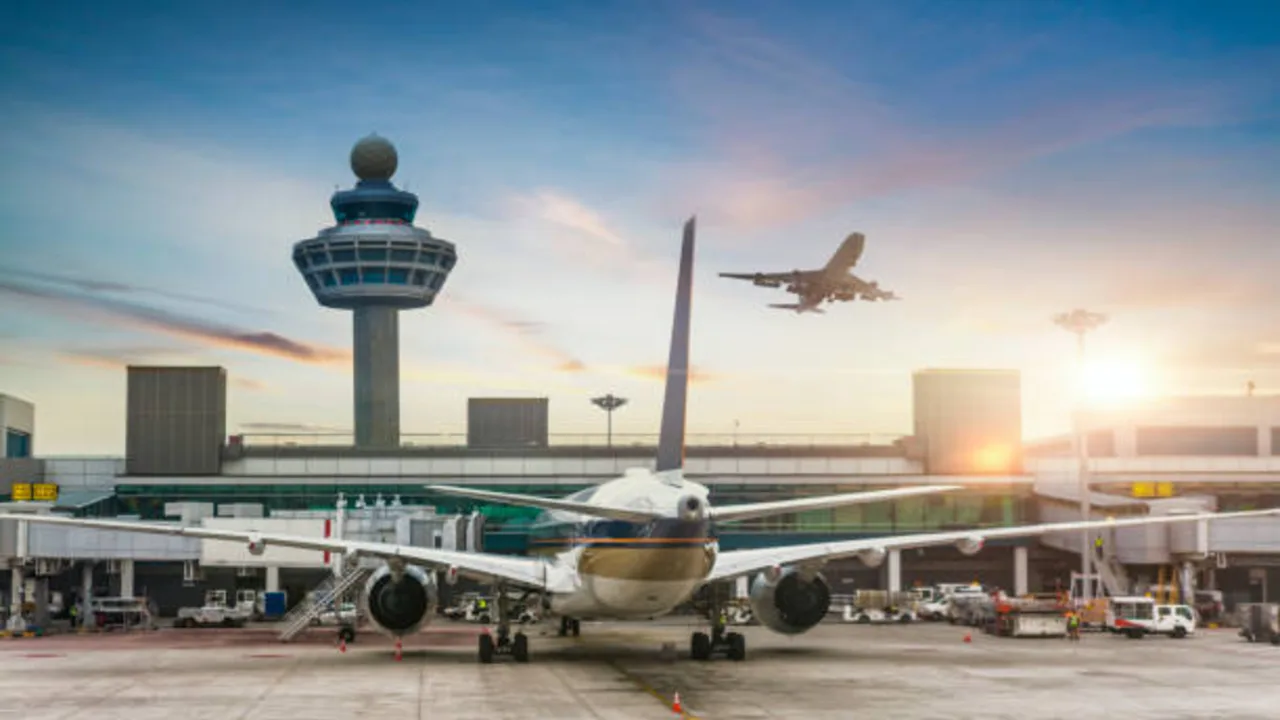
While the U.S. holds the top spot, fierce competition is brewing across the Middle East and Asia-Pacific regions, driven by aggressive infrastructure expansions.
Dubai International Airport (UAE)
Securing the number two spot globally is Dubai International Airport, which processed an incredible 95.2 million passengers. While Atlanta relies heavily on a mix of domestic and international travelers, Dubai holds a different, equally prestigious crown: it is the world’s absolute busiest hub for international passenger traffic. Acting as the home base for Emirates, Dubai connects East and West with unmatched long-haul efficiency.
Tokyo Haneda Airport (Japan)
Placing third globally is Tokyo Haneda Airport, handling 91.7 million passengers. Haneda’s sky-high numbers reflect the massive, ongoing travel rebound across the Asia-Pacific region. Its close proximity to downtown Tokyo makes it the preferred choice for business travelers and premium tourists alike.
Shanghai Pudong International Airport (China)
Positioned at number five with 85 million passengers, Shanghai Pudong has emerged as the fastest-rising mega-hub in the entire aviation industry. Driven by a massive 10.7% annual traffic surge following eased travel restrictions, Shanghai Pudong climbed all the way from the 10th spot to the 5th spot in a single year.
North American Dominance: The Core U.S. Hubs
The remaining American entries in the top ten showcase how decentralized yet hyper-connected the U.S. aviation network truly is.
-
Dallas Fort Worth International Airport (U.S.): Snagging the fourth spot globally with 85.7 million passengers, DFW serves as the colossal main hub for American Airlines, anchoring central cross-country connections.
-
Chicago O’Hare International Airport (U.S.): Coming in at sixth place with 84.8 million passengers, O’Hare remains a legendary transit point. Interestingly, while it ranks sixth in passenger volume, it frequently trades the number-one spot globally for total aircraft movements (the actual number of daily plane takeoffs and landings).
-
Denver International Airport (U.S.): Rounding out the top ten at 82.4 million passengers is Denver. Despite being a relatively modern build—opening its doors in 1995—Denver has capitalized on its massive domestic flight connectivity. It also holds the distinct honor of being North America’s largest airport by total land mass.
The Euro-Asian Gateways
The final slots in the top ten represent vital crossroads connecting Europe, the Middle East, and Asia.
London Heathrow (U.K.) & Istanbul Airport (Turkiye)
In an incredibly tight race, Europe’s premier gateway and its Mediterranean rival are locked in a virtual tie for the 7th and 8th spots, with both London Heathrow and Istanbul Airport processing 84.4 million passengers each. Heathrow continues to operate under extreme space constraints at near-total capacity, while Istanbul’s massive, newly built mega-airport continues to scale rapidly, threatening to permanently overtake its Western European counterparts.
Guangzhou Baiyun International Airport (China)
Slotted at number nine with 83.6 million passengers, Guangzhou Baiyun marks another massive victory for Chinese aviation recovery. Situated in the heart of China’s economic engine—the Greater Bay Area—this airport handles an intense mix of heavy industrial cargo traffic and booming commercial passenger volumes.
Monitoring which facilities earn the title of a busy airport is about more than just trivia; it is a direct diagnostic tool for analyzing global economic health. The current rankings show an aviation industry that has not only recovered but is actively scaling to meet an insatiable global demand for mobility.
As airports like Shanghai and Istanbul continue their aggressive infrastructure expansions, the global leaderboard will undoubtedly shift. However, for the foreseeable future, the combination of unmatched American domestic flight volume and targeted international mega-hubs ensures that names like Atlanta, Dubai, and Tokyo will remain the defining crossroads of human civilization.